Computational Design · 2024
View Optimization
Computational form-finding through view optimization
A genetic algorithm shapes a Chicago high-rise so every home has maximum unobstructed views. Floor-plate proportion, rotation and twist are the genes; unobstructed views are the fitness. The winner is voxelised into stacked homes.
- Context
- University of Michigan · Research
- Role
- Individual research
- Location
- Chicago
- Year
- 2024
- Tools
- Genes · proportion, rotation, twist
- 3
- Total iterations
- 696
The question
In a dense downtown, the view is the most valuable thing a home can have. Instead of drawing a tower and testing it, what if the tower were grown from its views?
The genes
A parametric tower with three genomes: floor-plate proportion, overall rotation, and a sequential twist from floor to floor. Galapagos, an evolutionary solver, breeds and mutates variants. Fitness counts the view rays that reach the Chicago River, Navy Pier and other landmarks unobstructed.
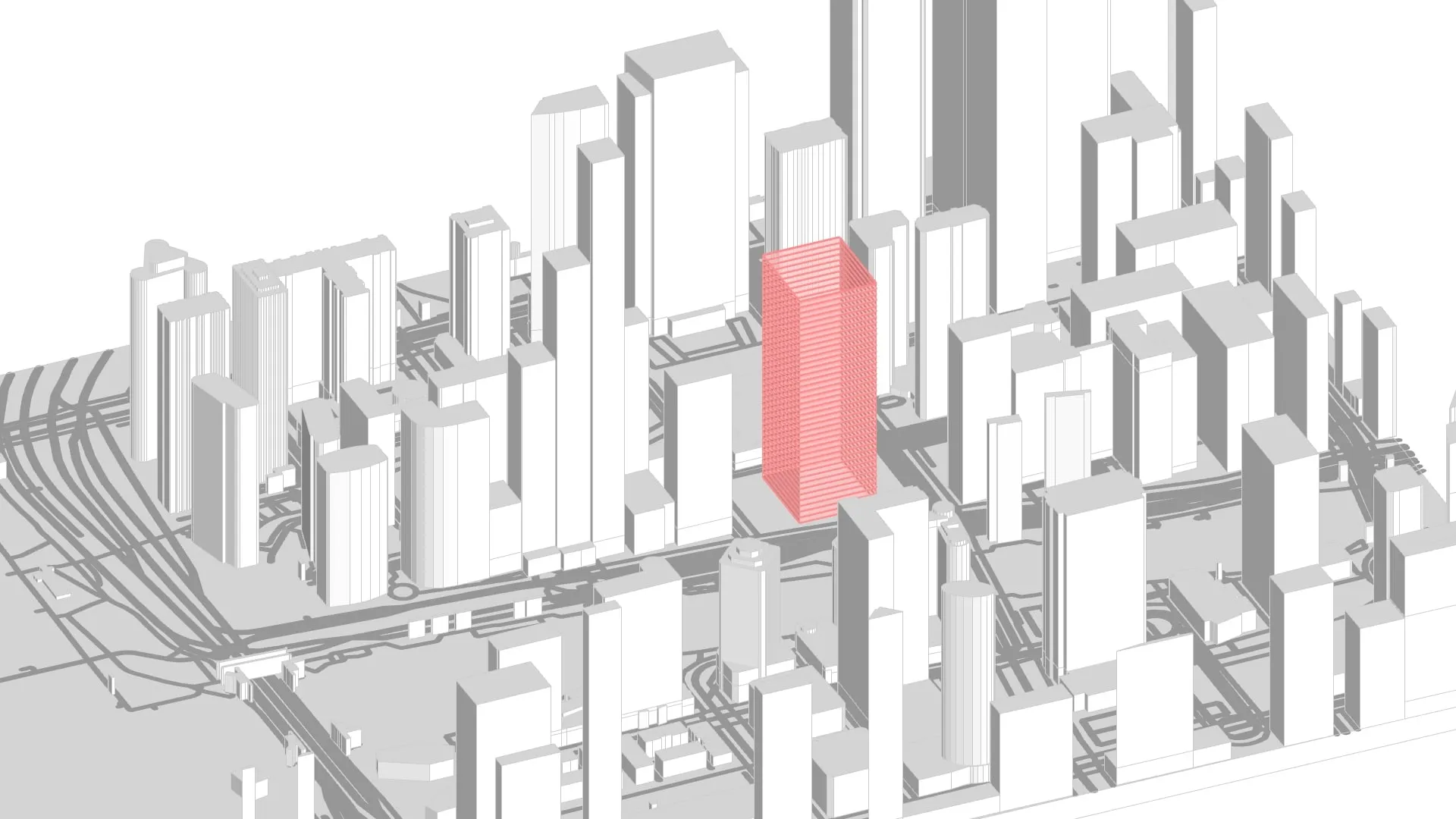
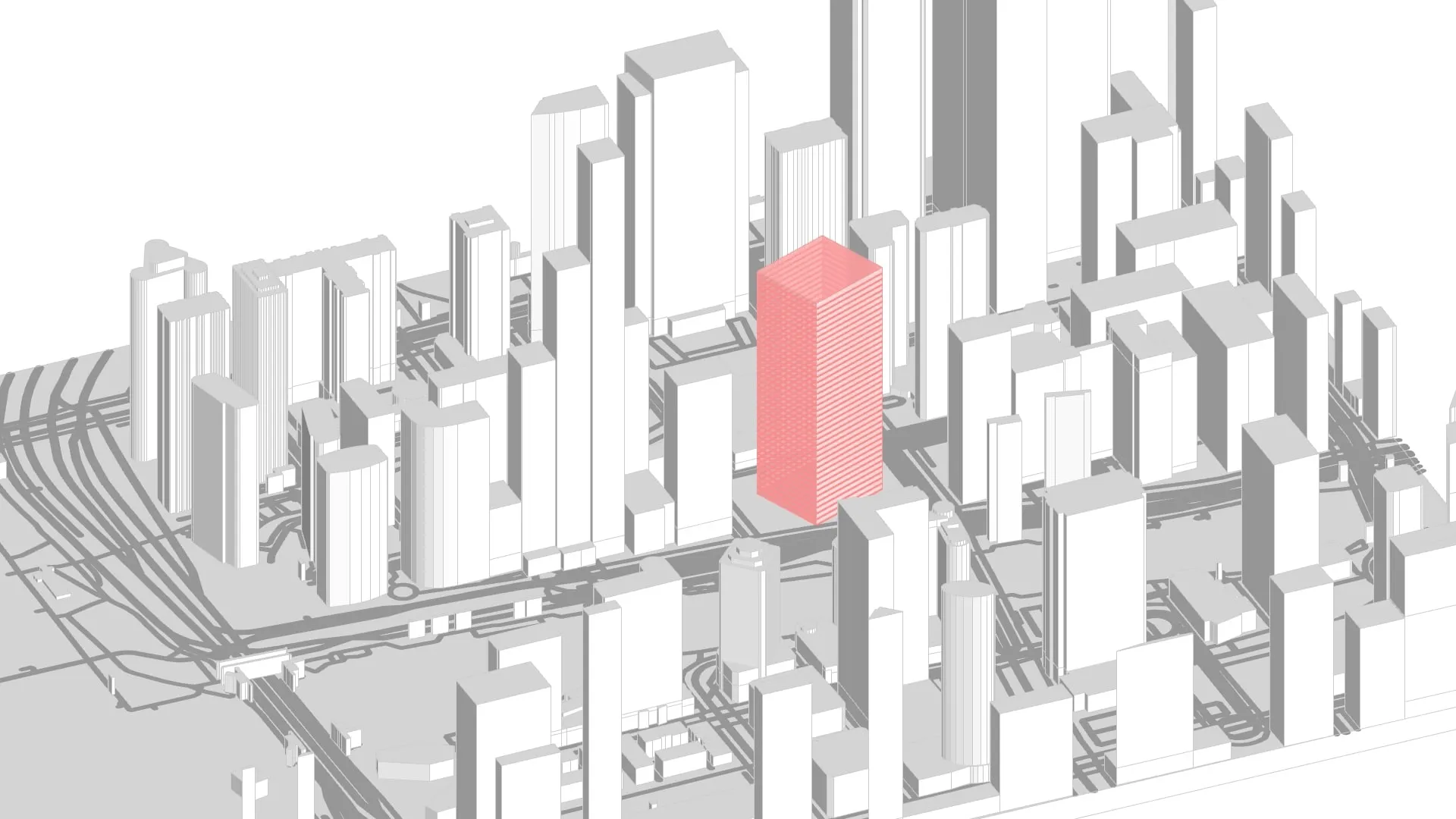
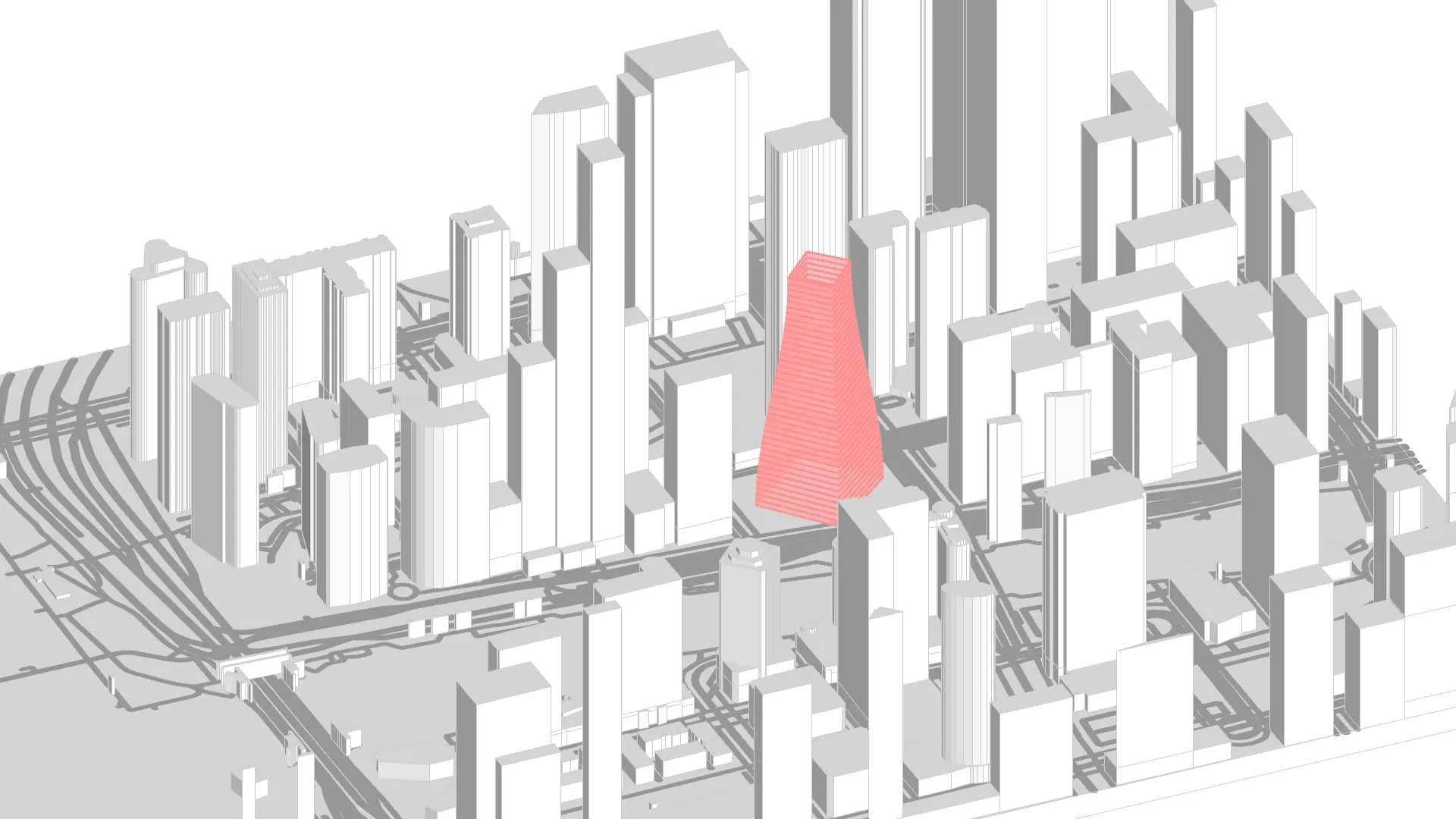
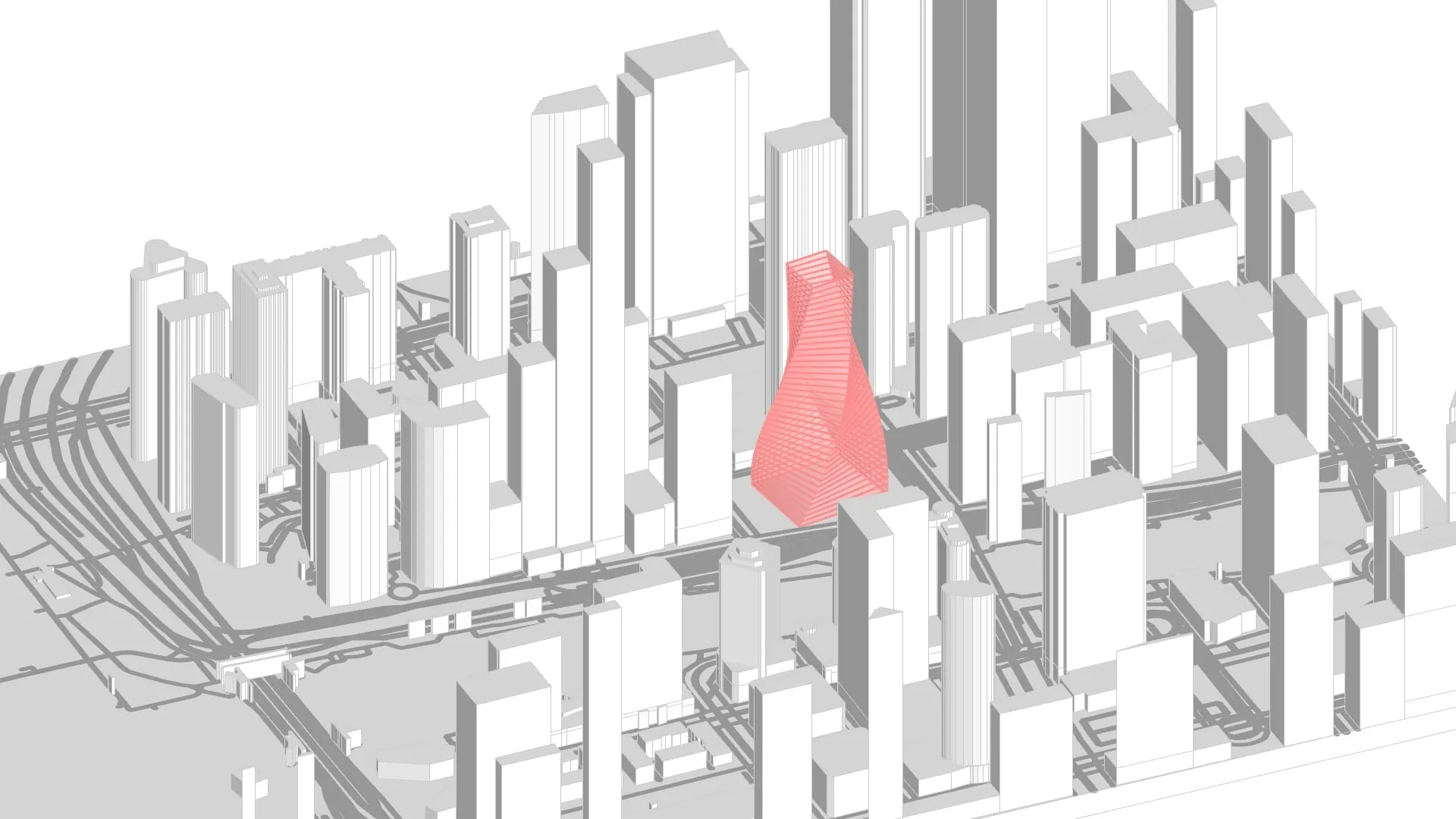
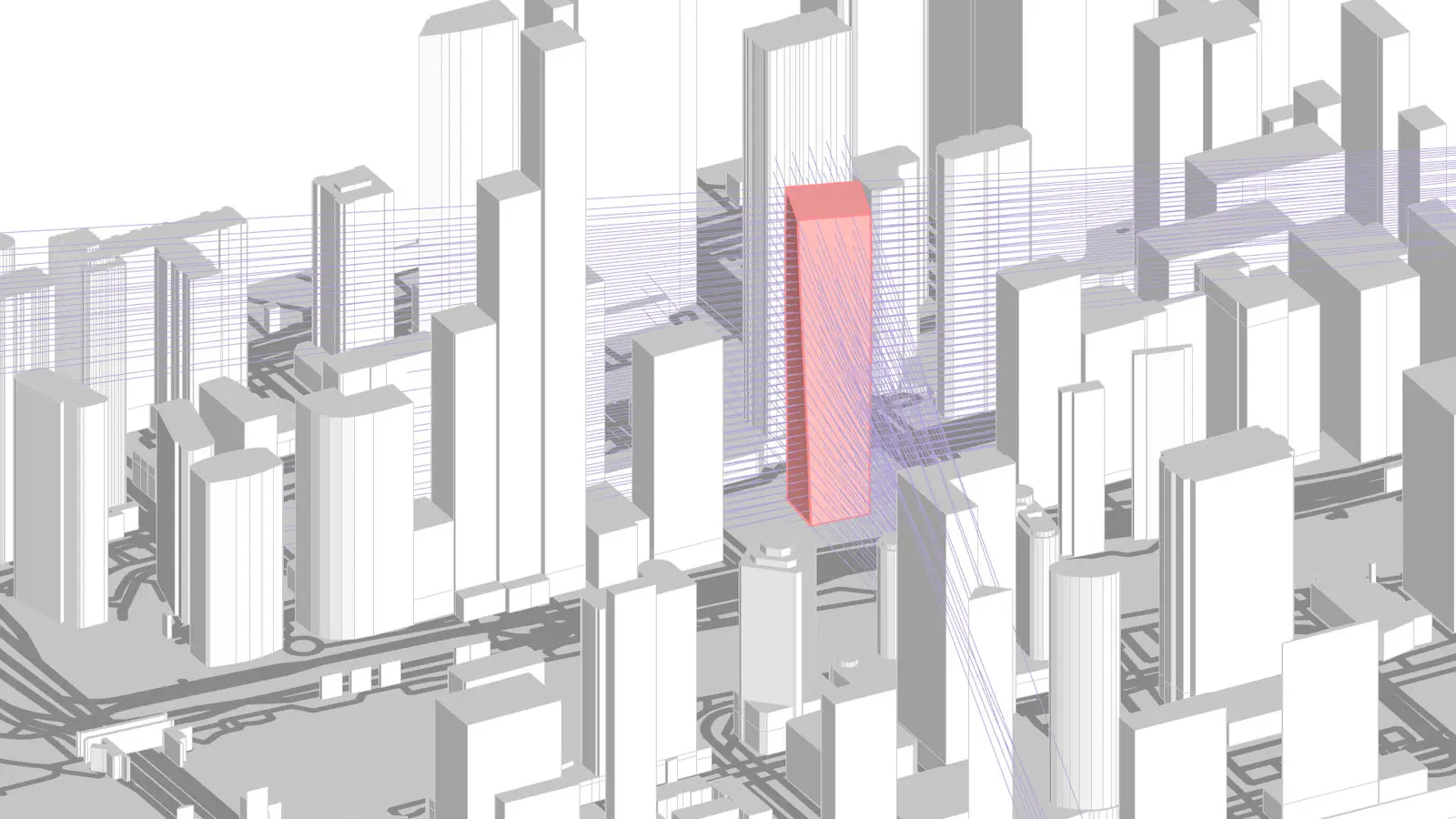
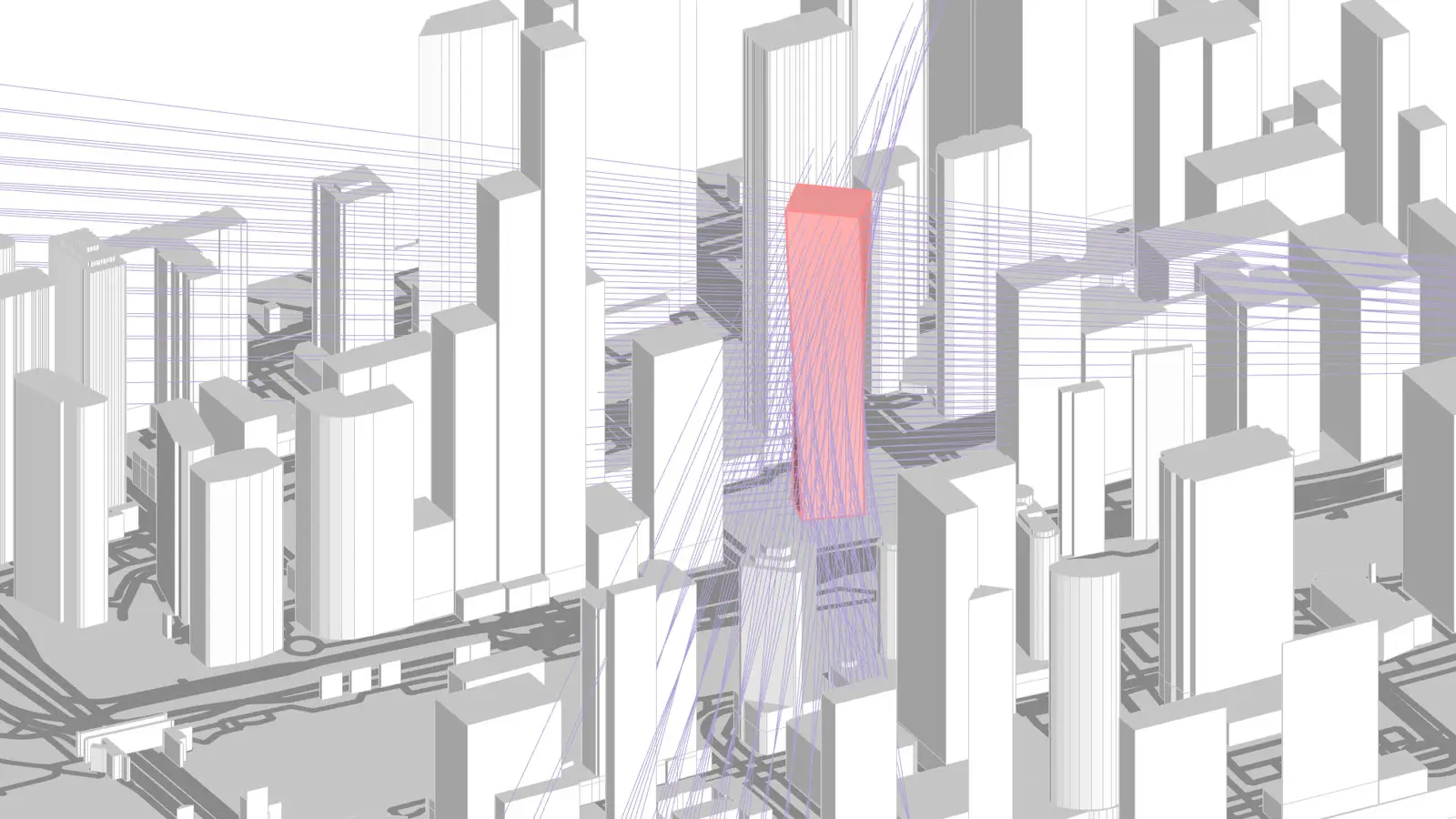
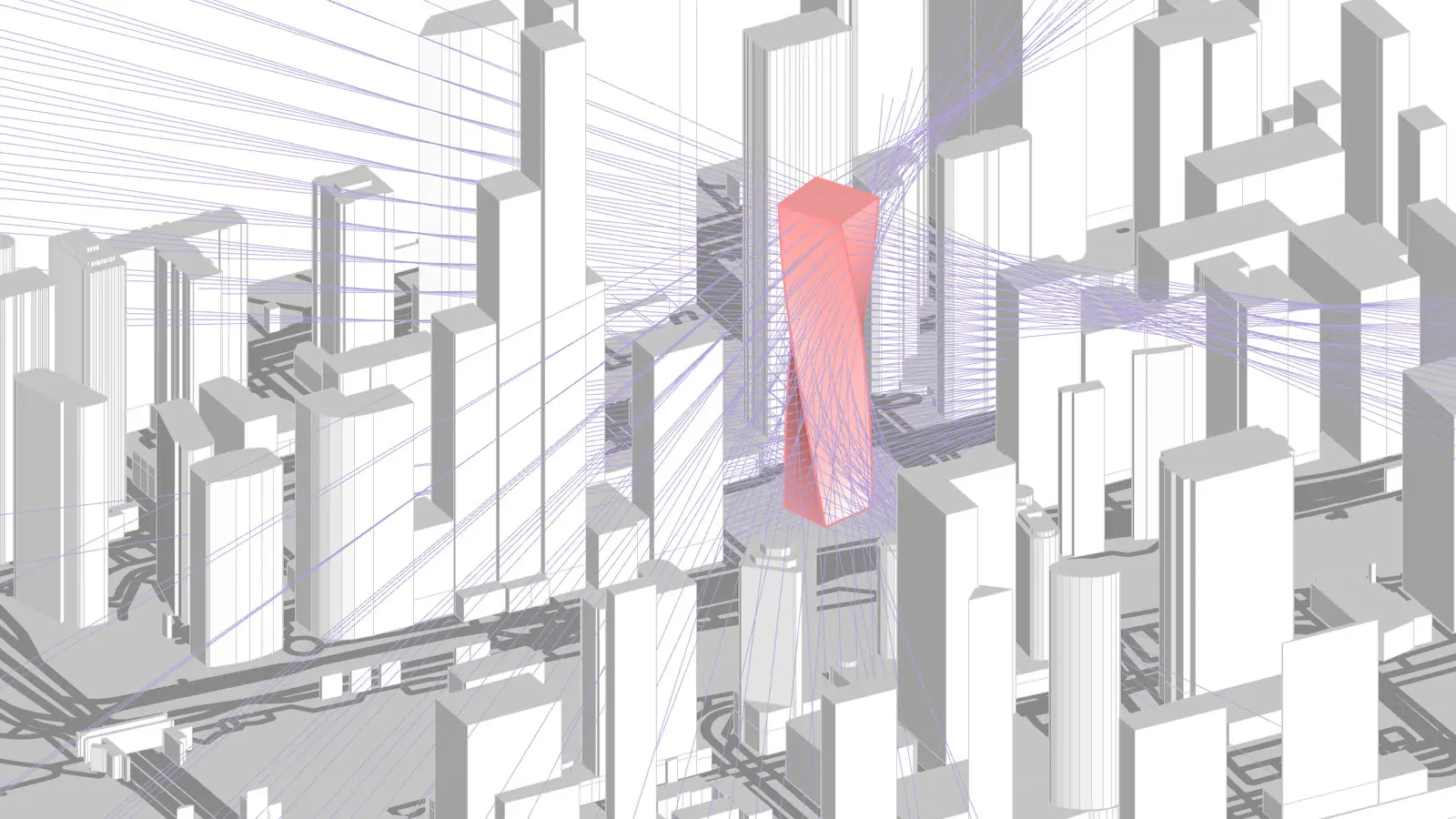
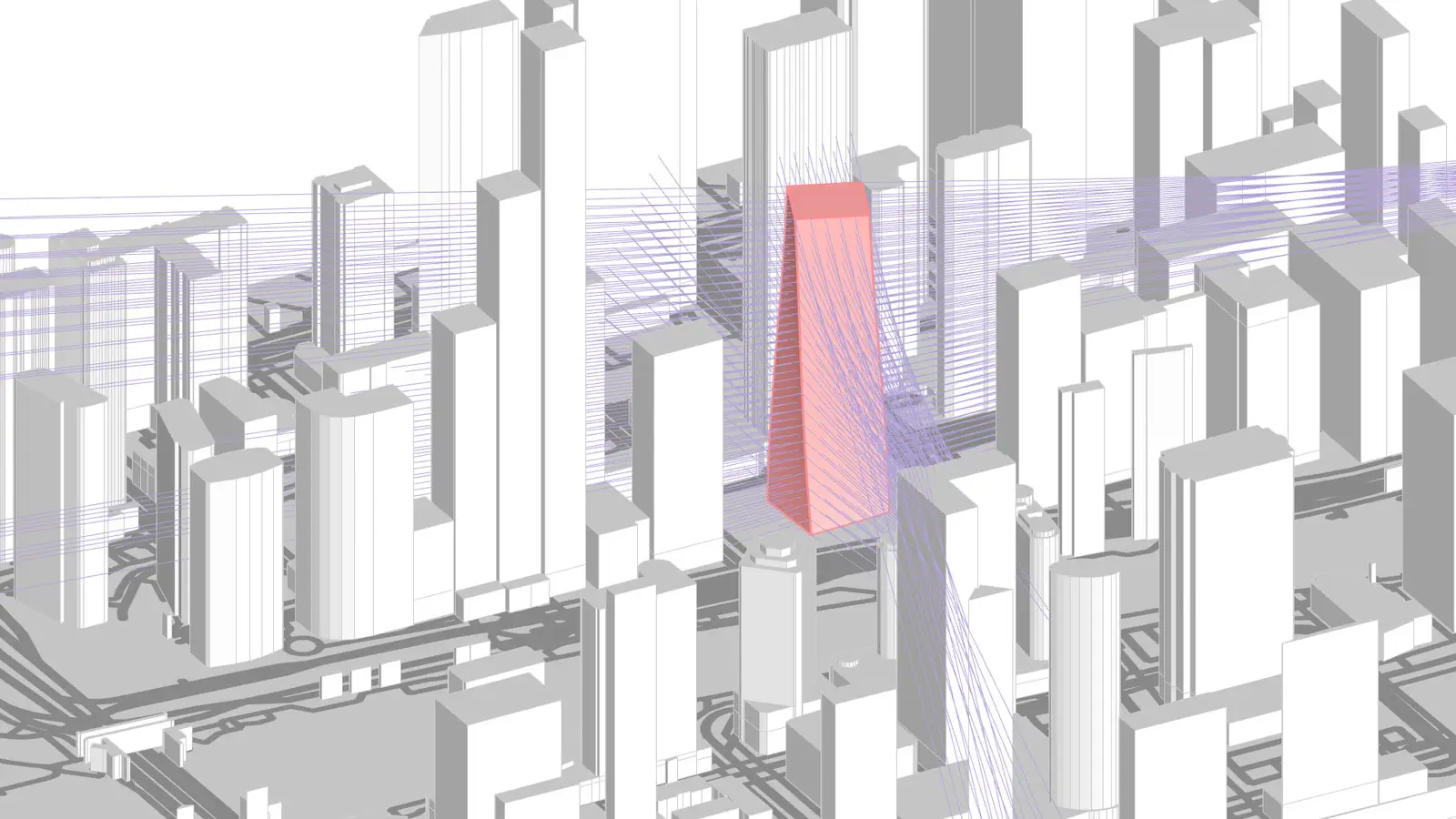
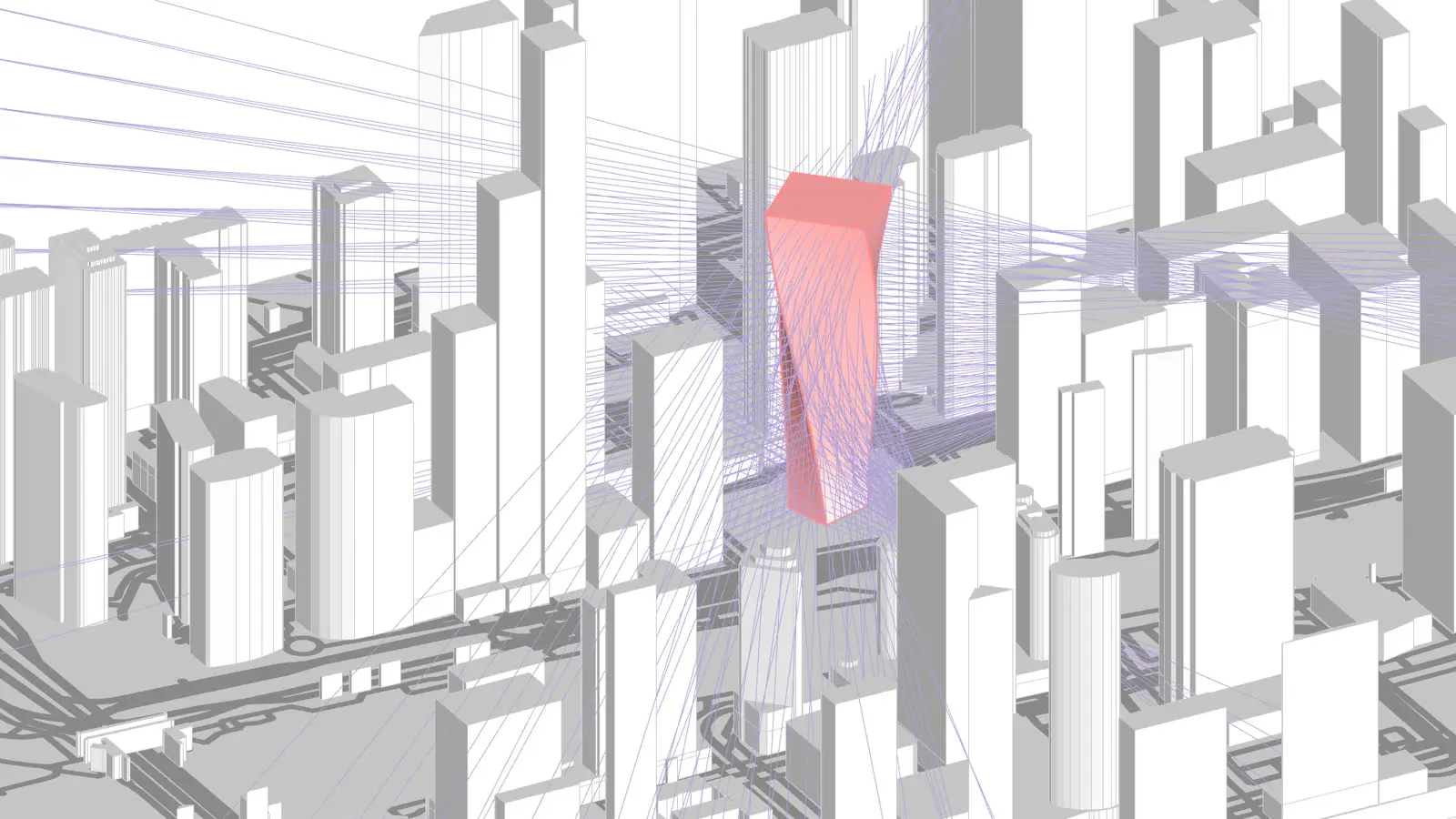
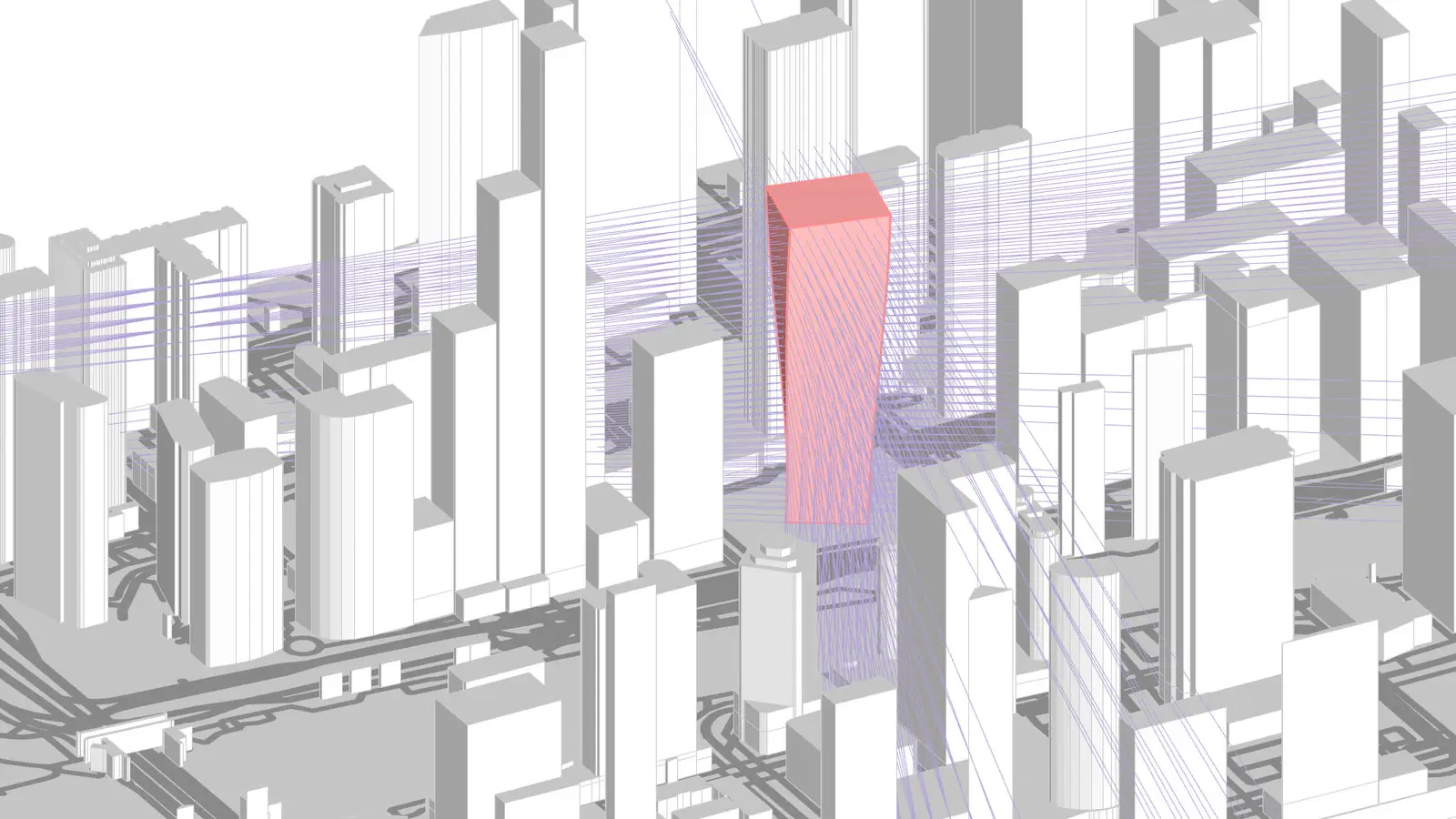
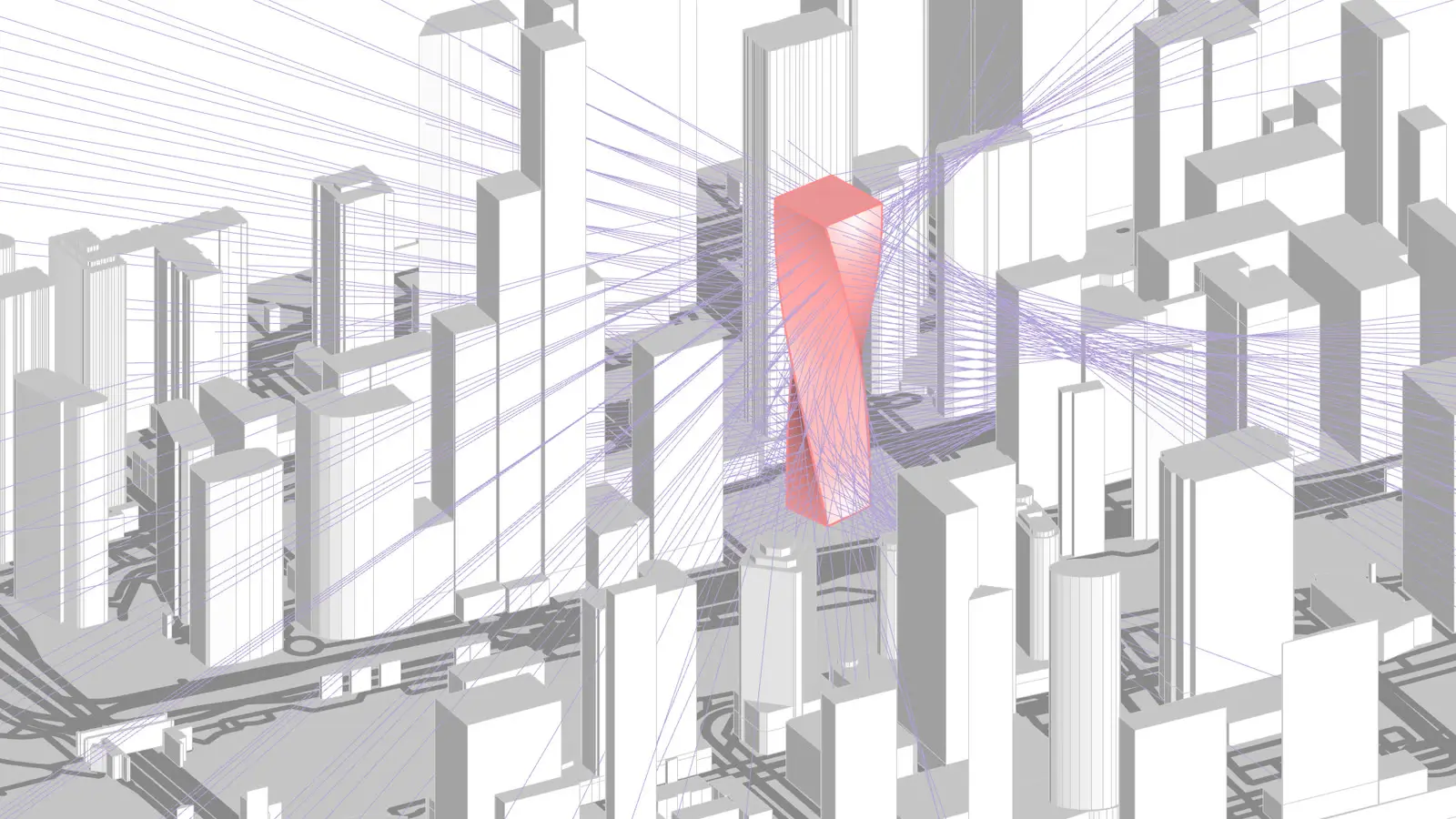
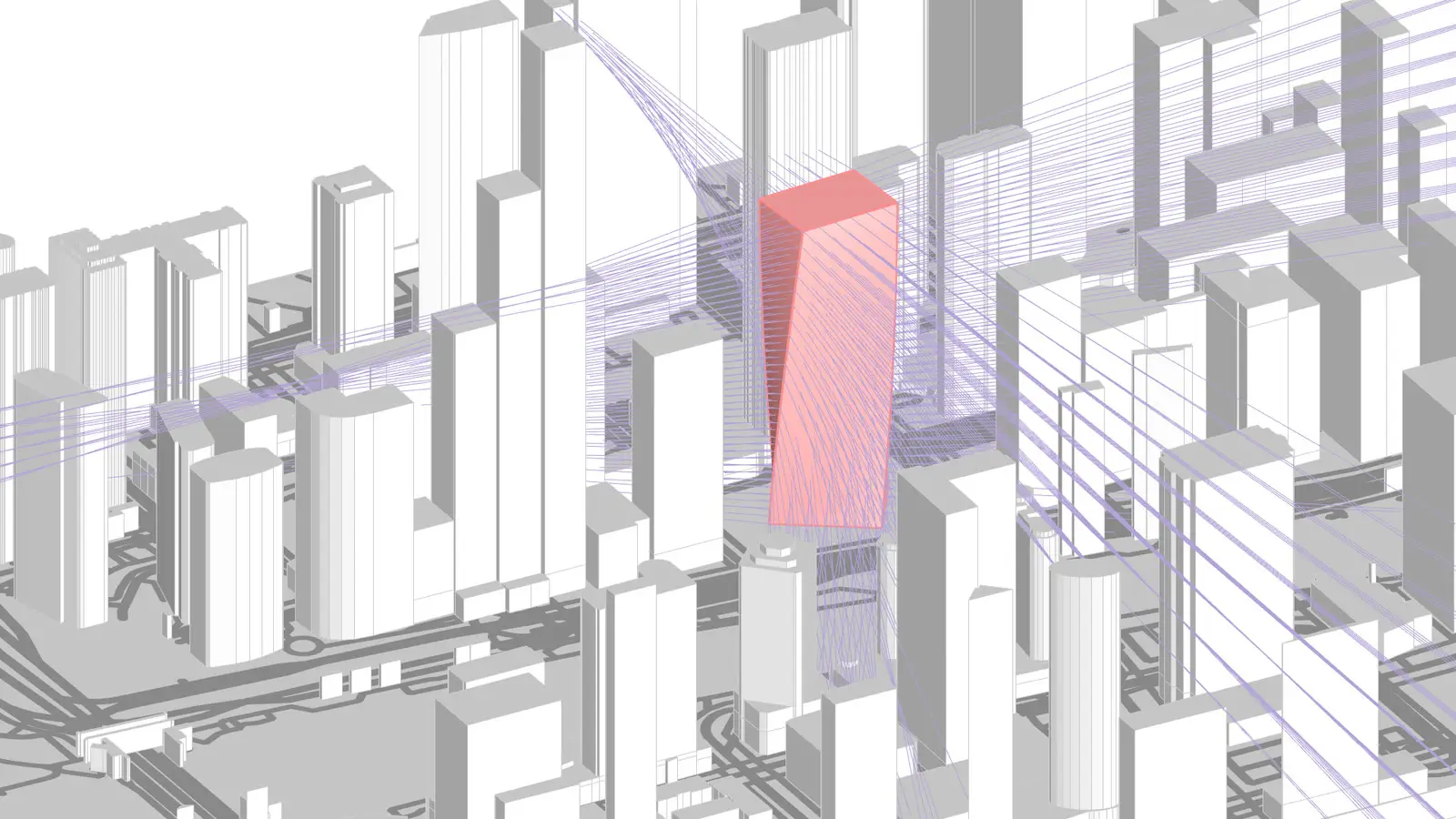
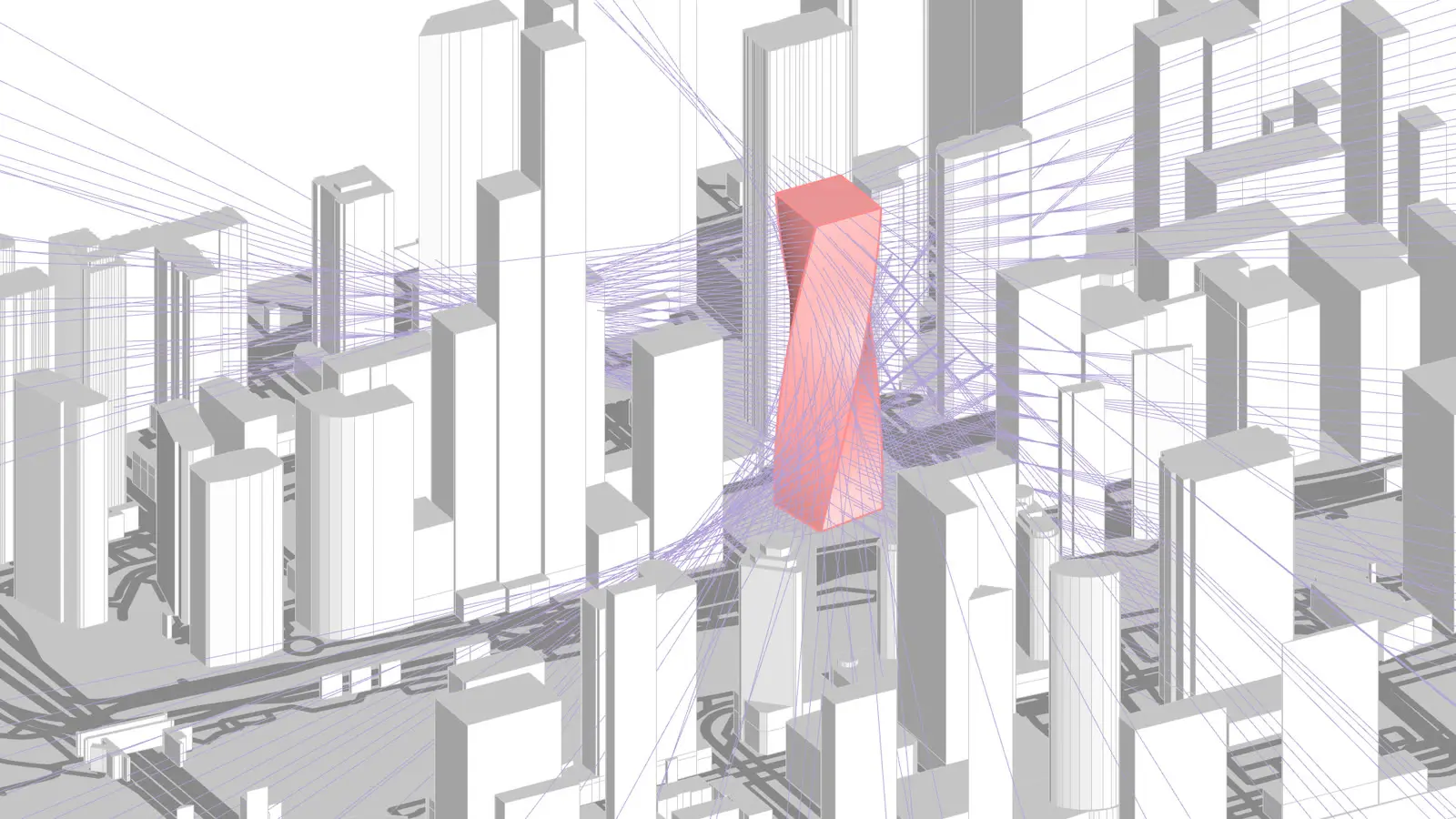

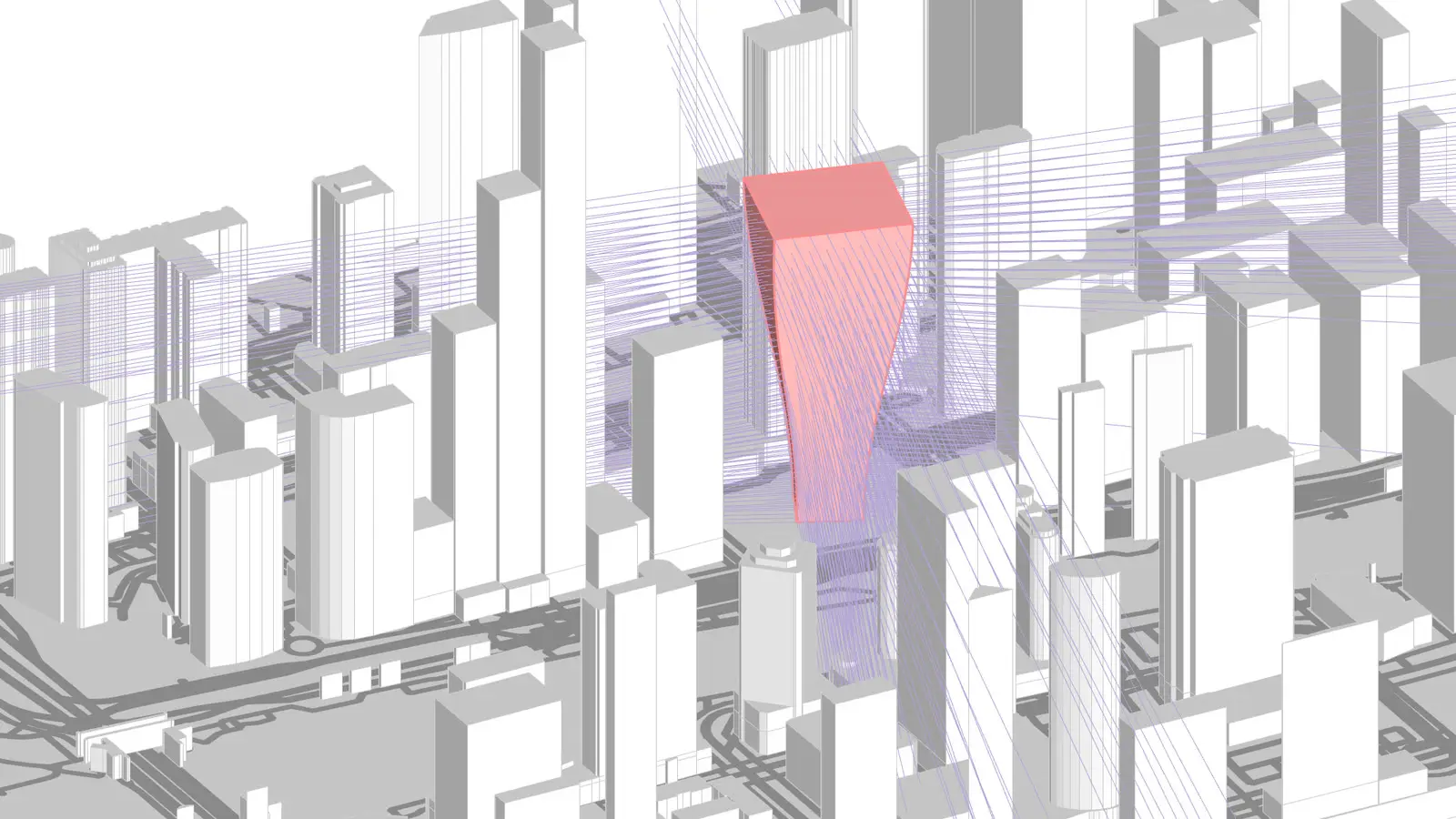
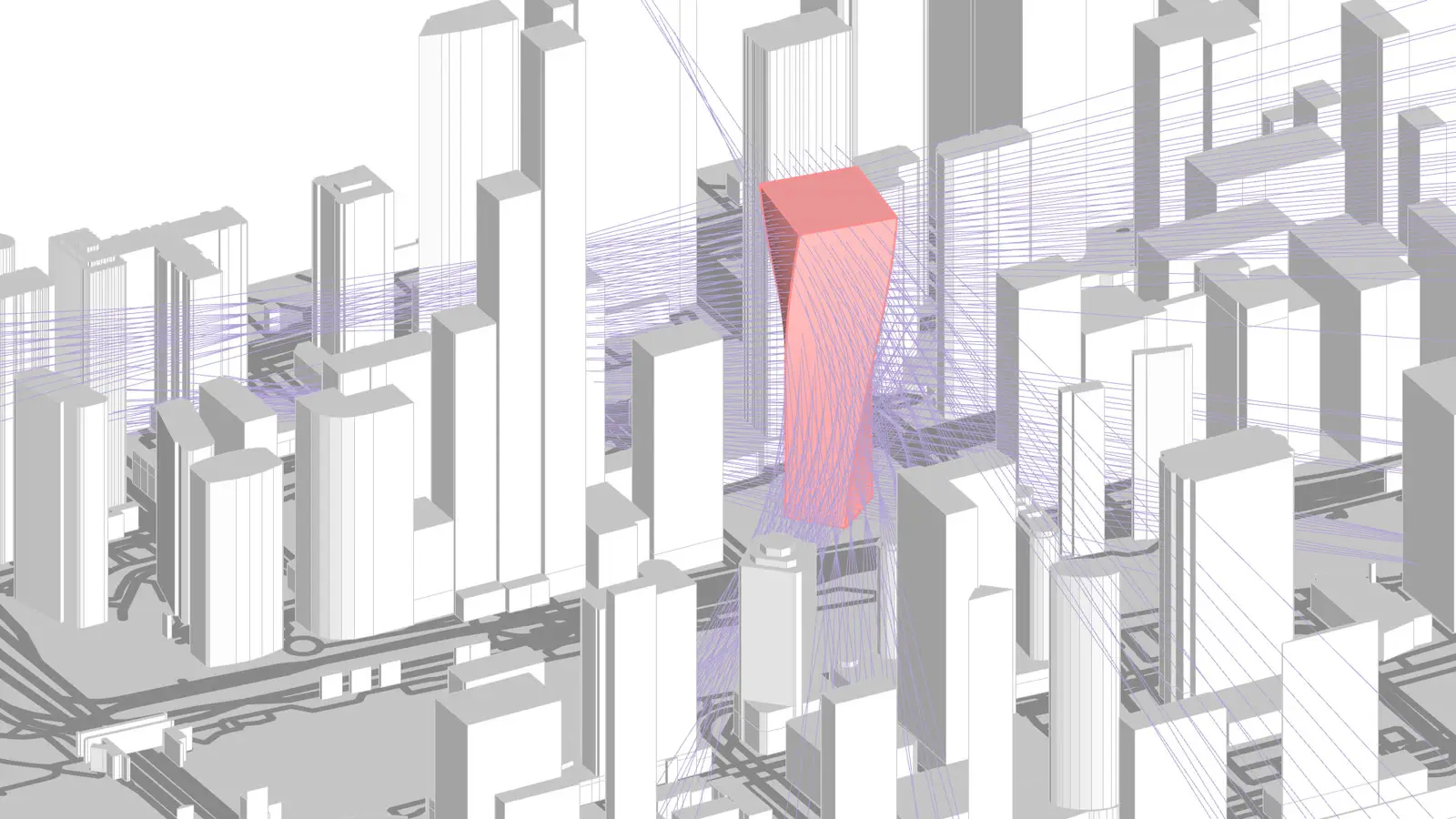
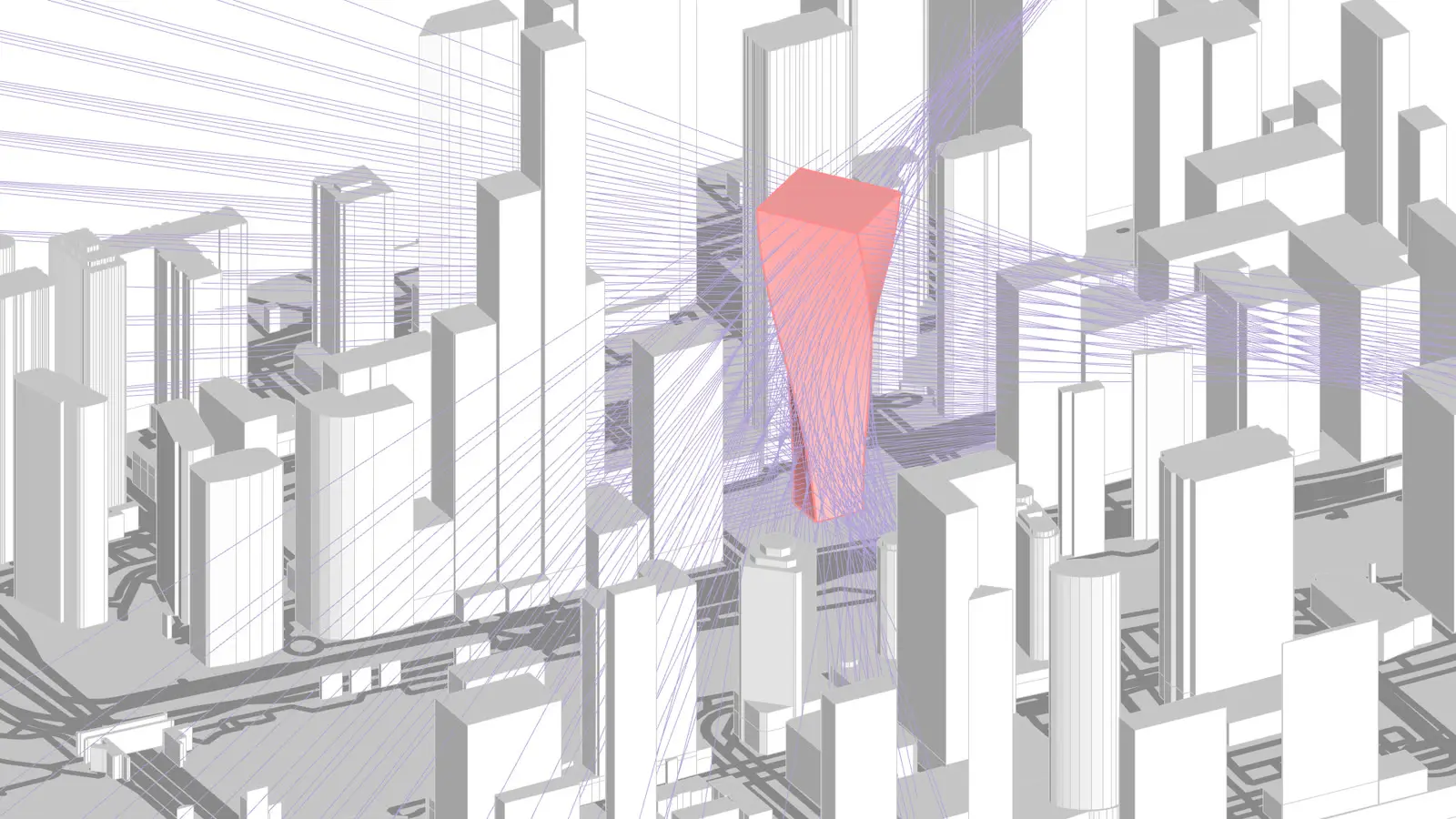
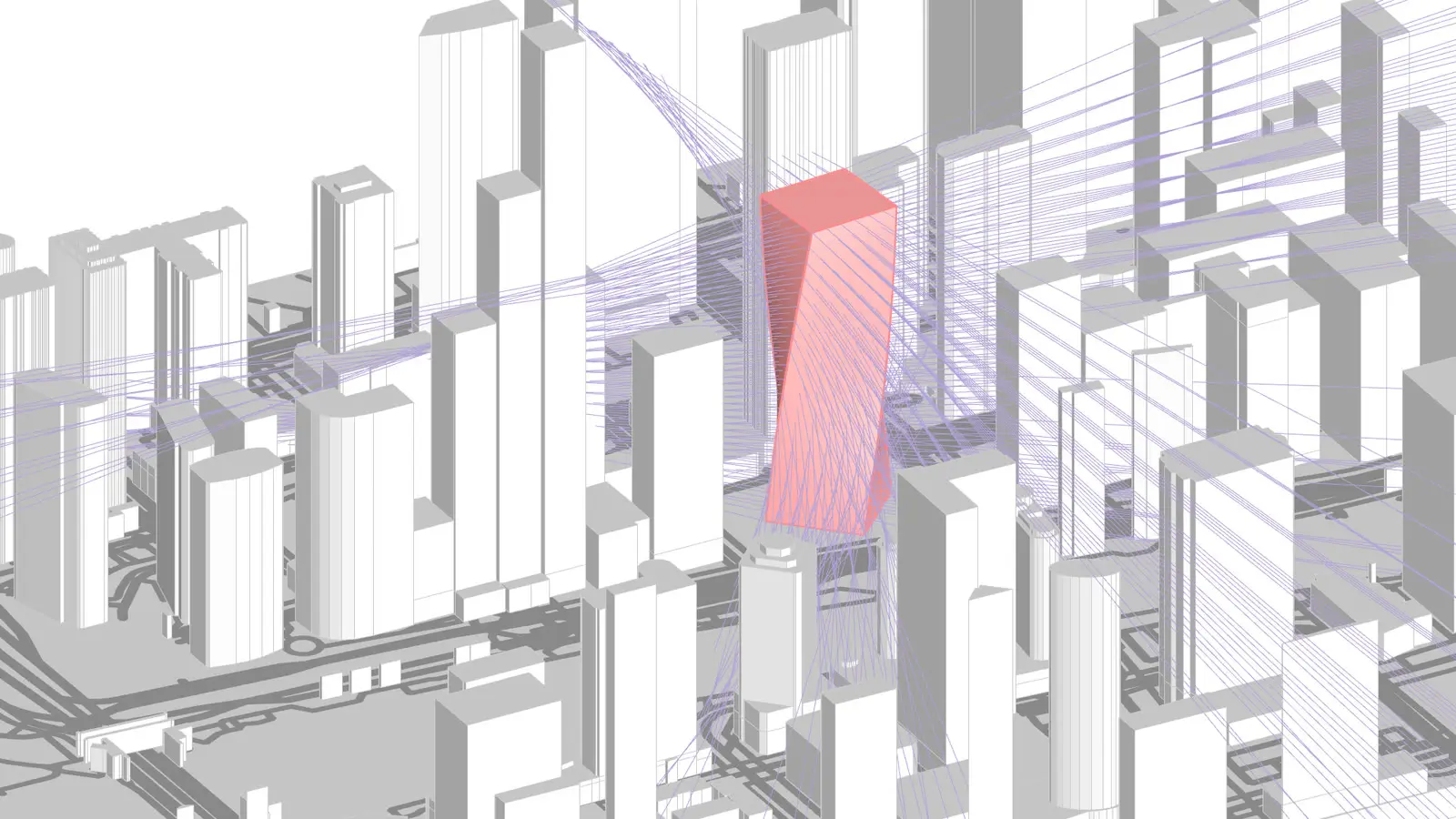
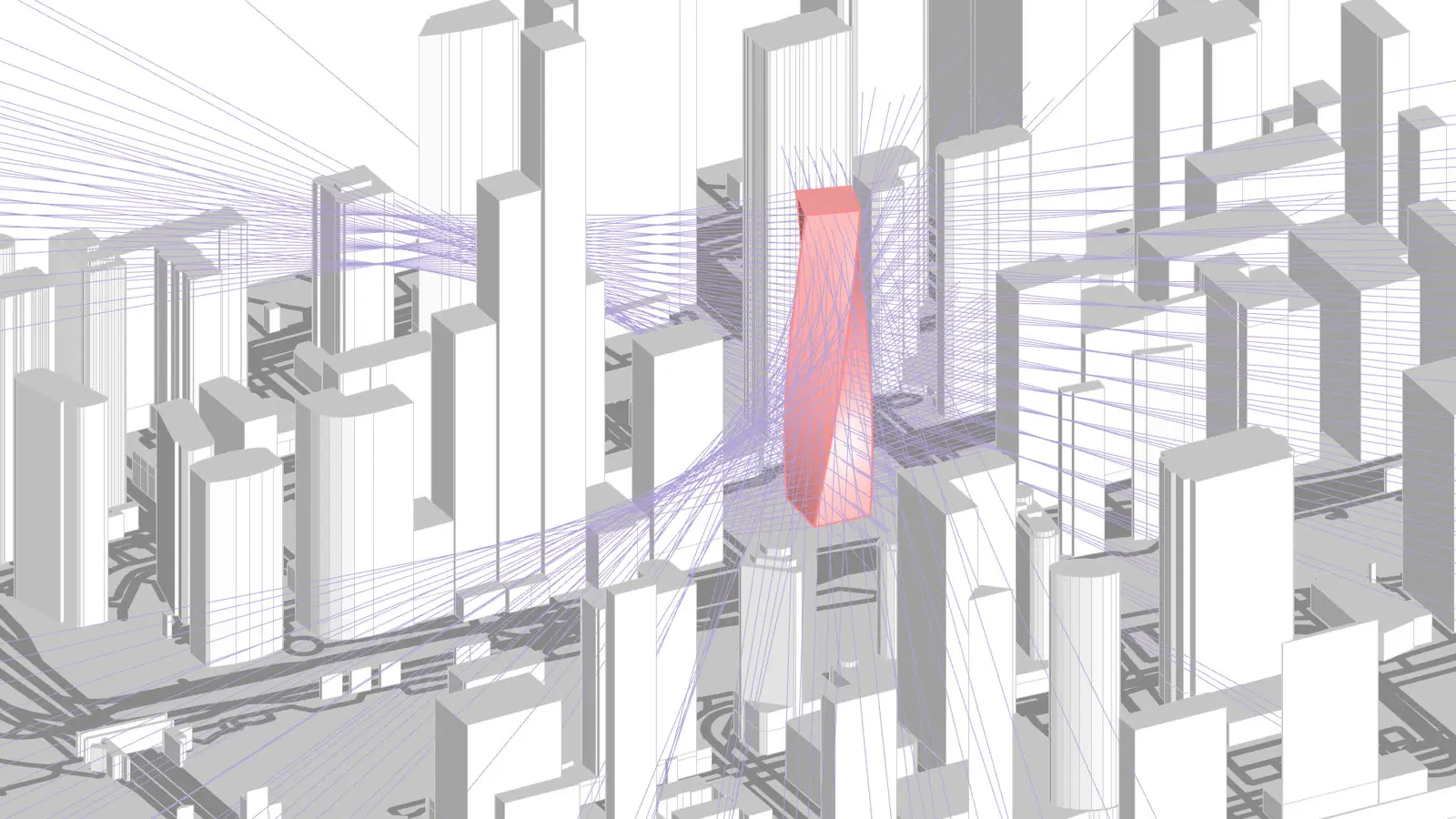
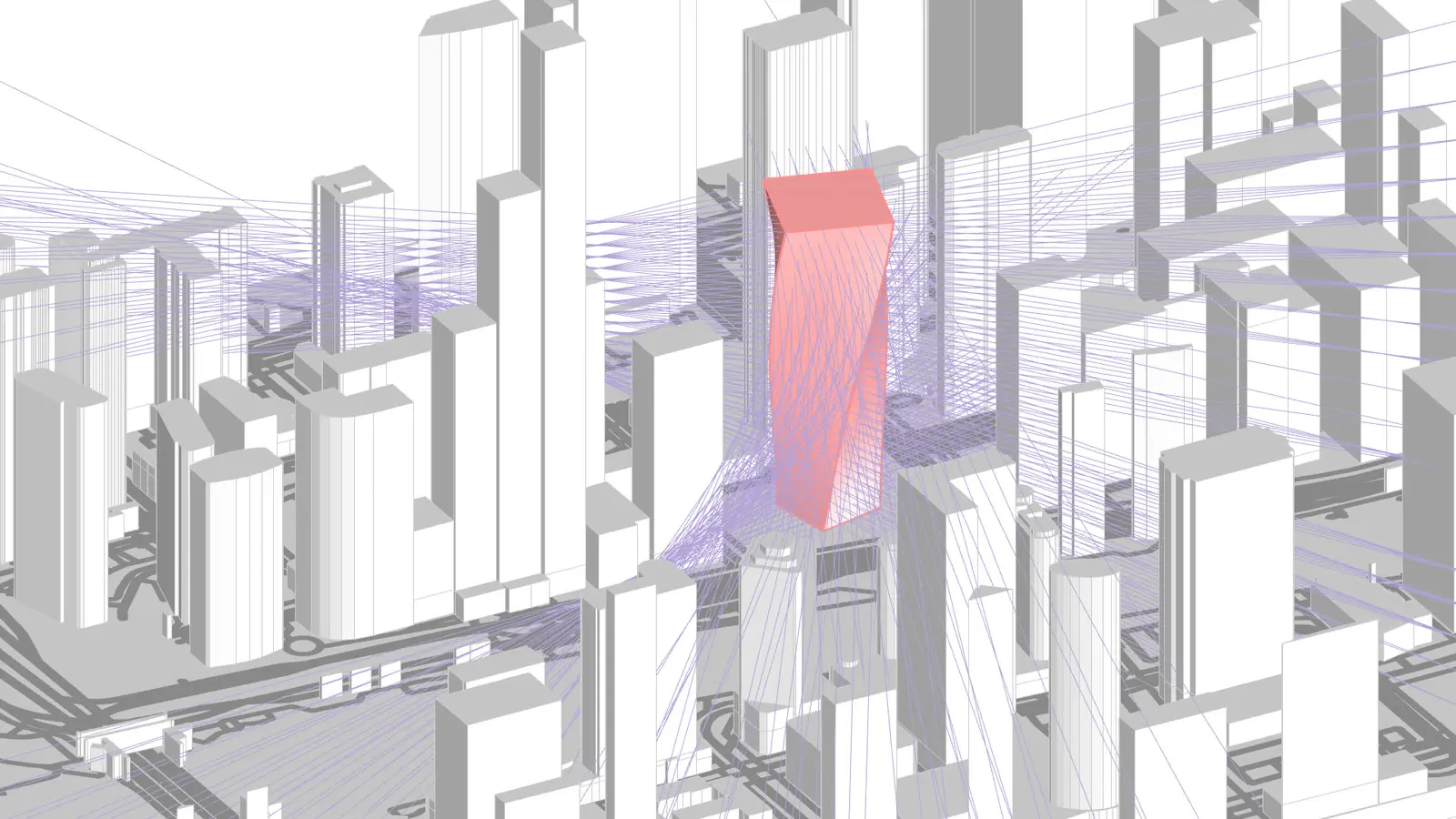
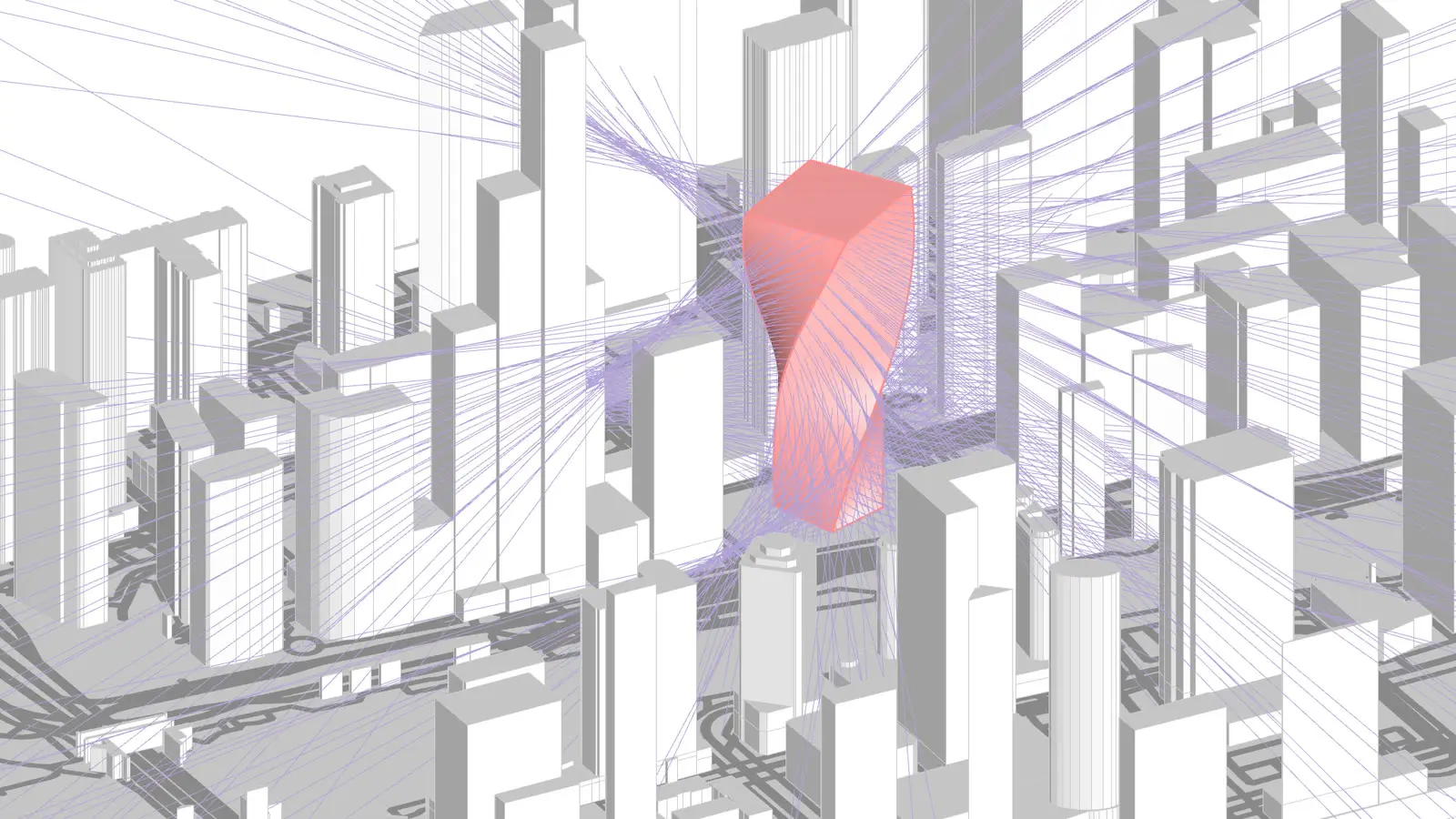
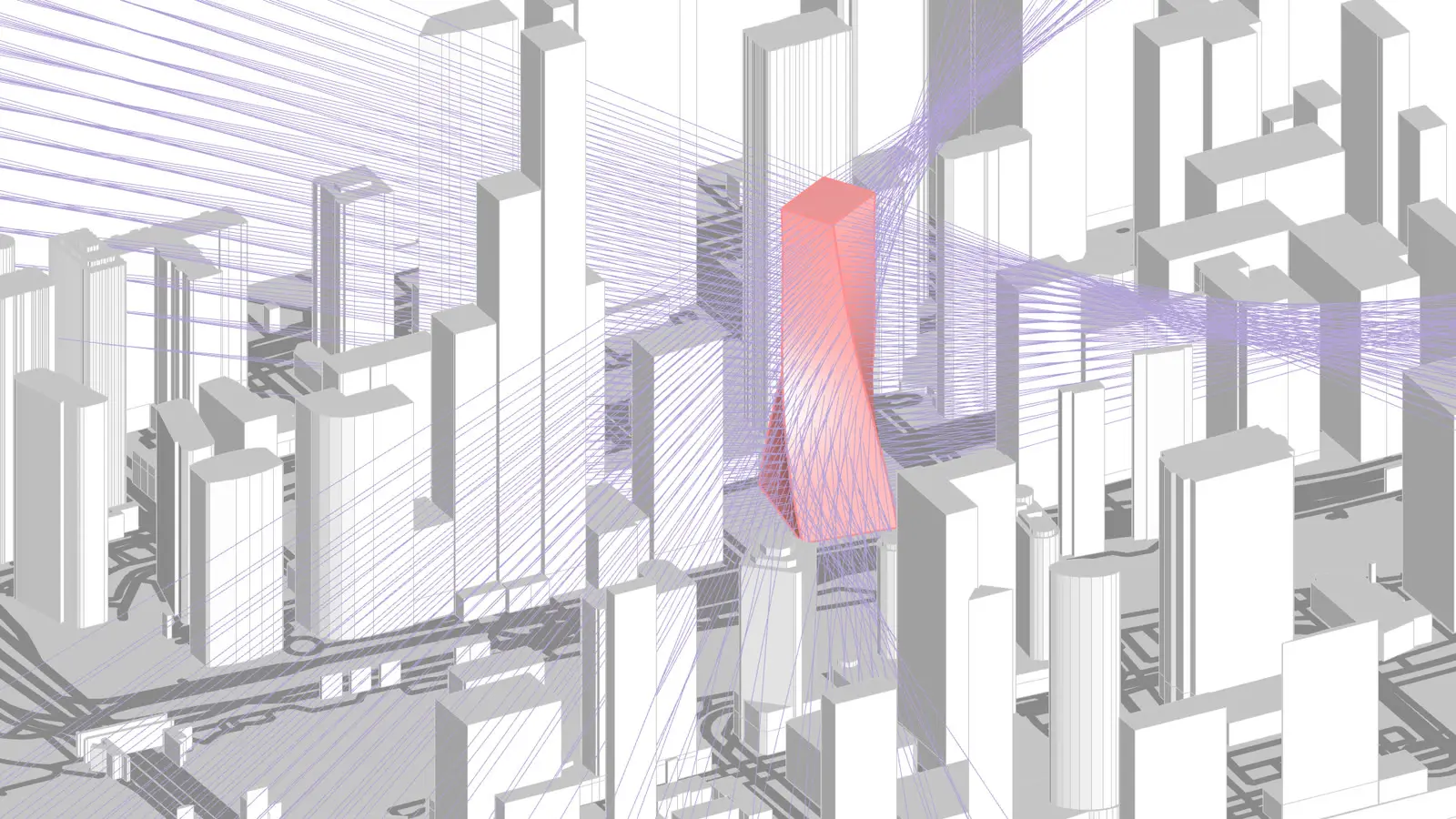
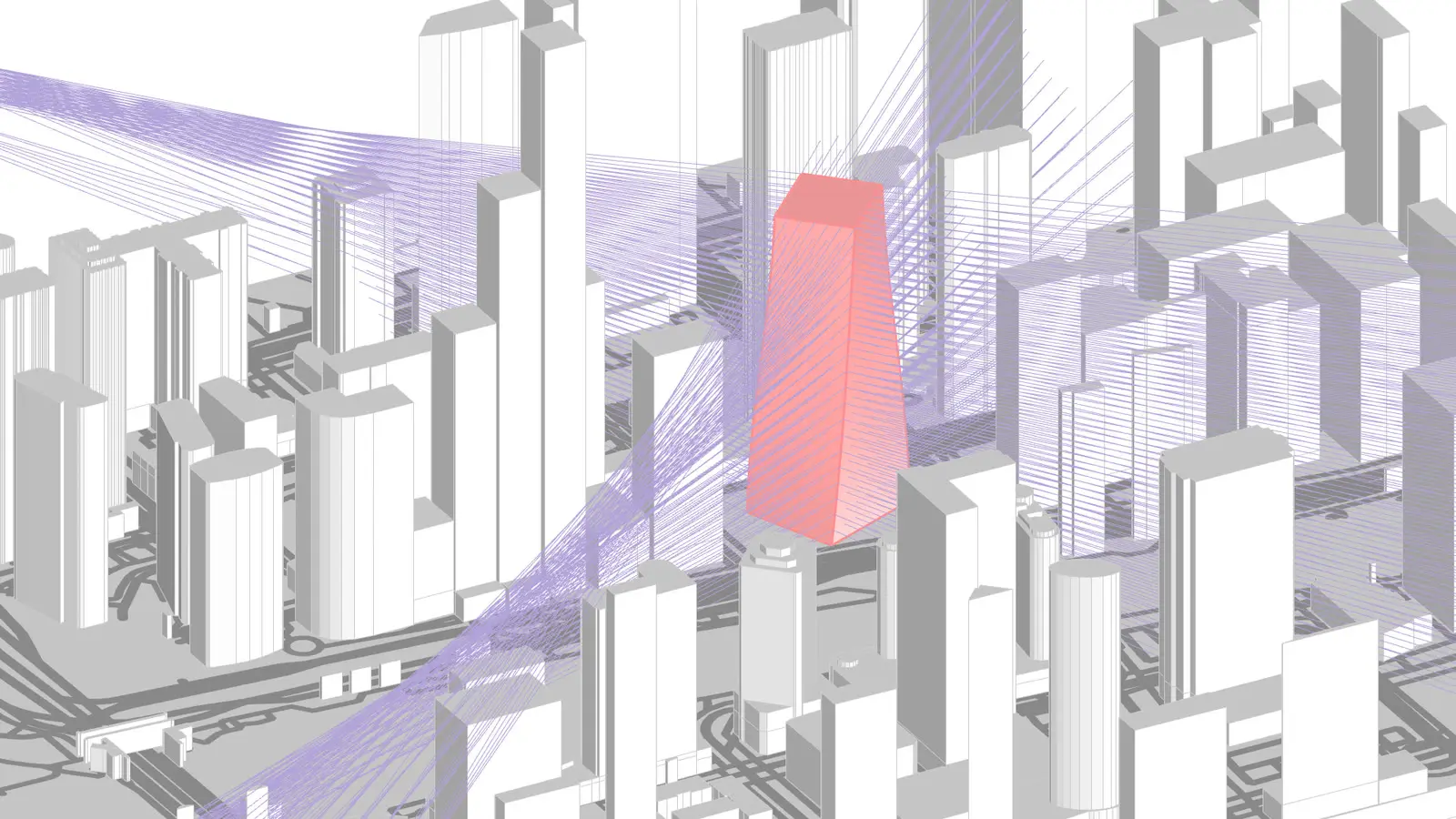
Galapagos searching for views. Scroll or drag to step through the iterations.
Iteration 01 / 19
First generationFittest form
The result
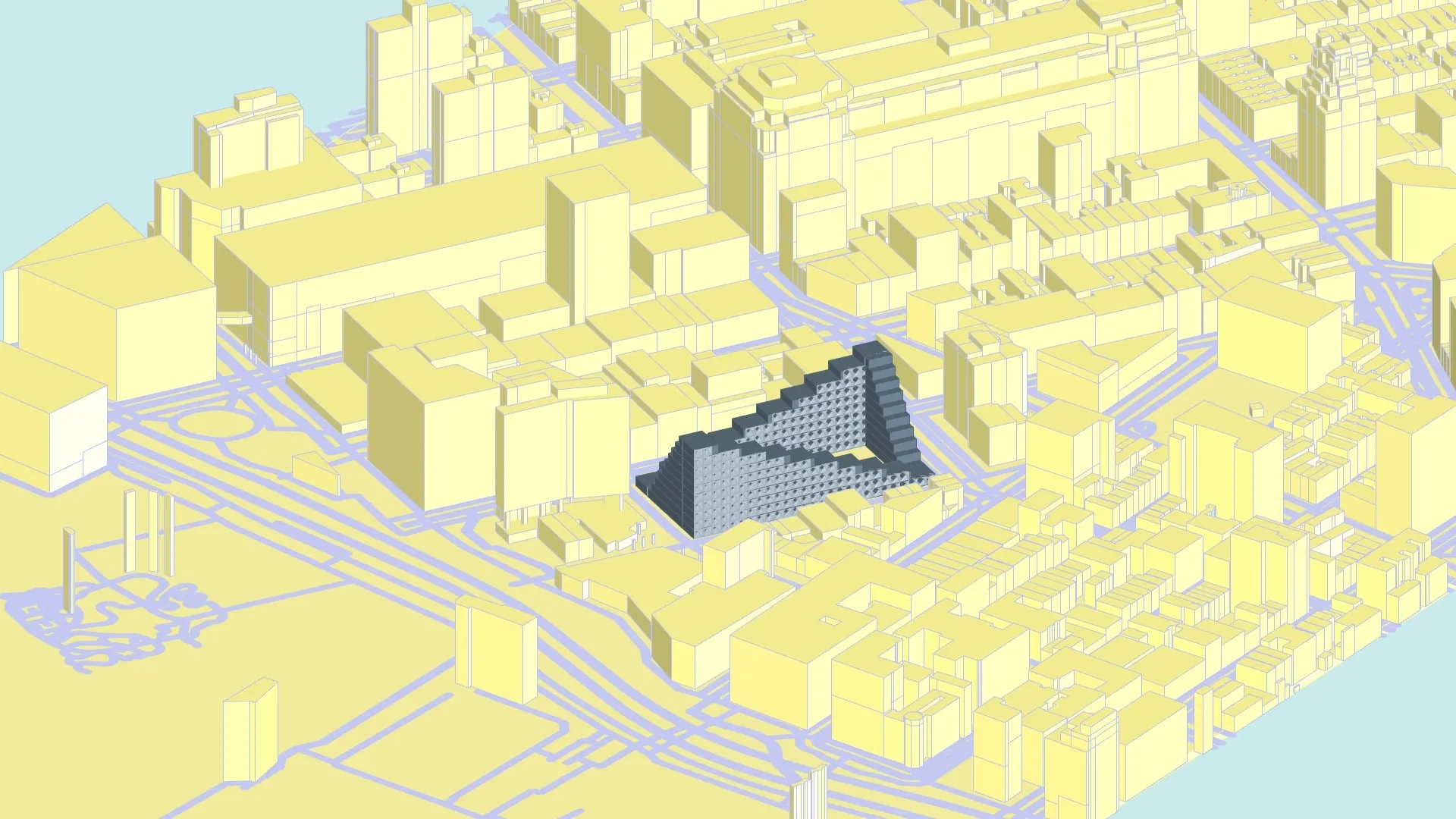
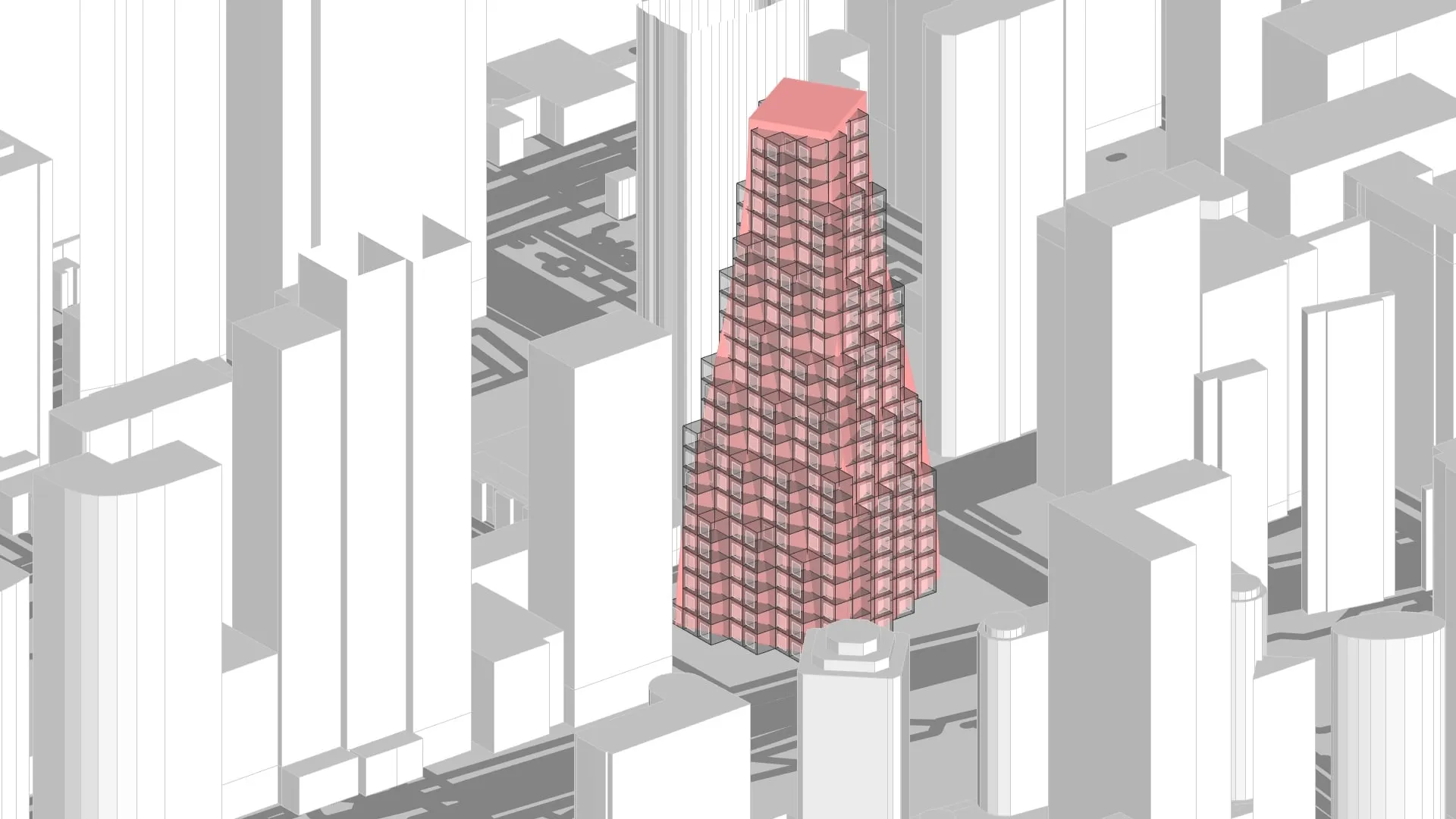
The fittest form is voxelised into stacked housing units, and windows are placed only where the view is clear. The algorithm finds the massing; the voxels turn it into rooms.
Gallery
Landmark targets around the site.