Digital Fabrication · 2024–2025
Pneuma-Bloom
Air-Driven 4D Textile Composites for Multisensory Space Creation
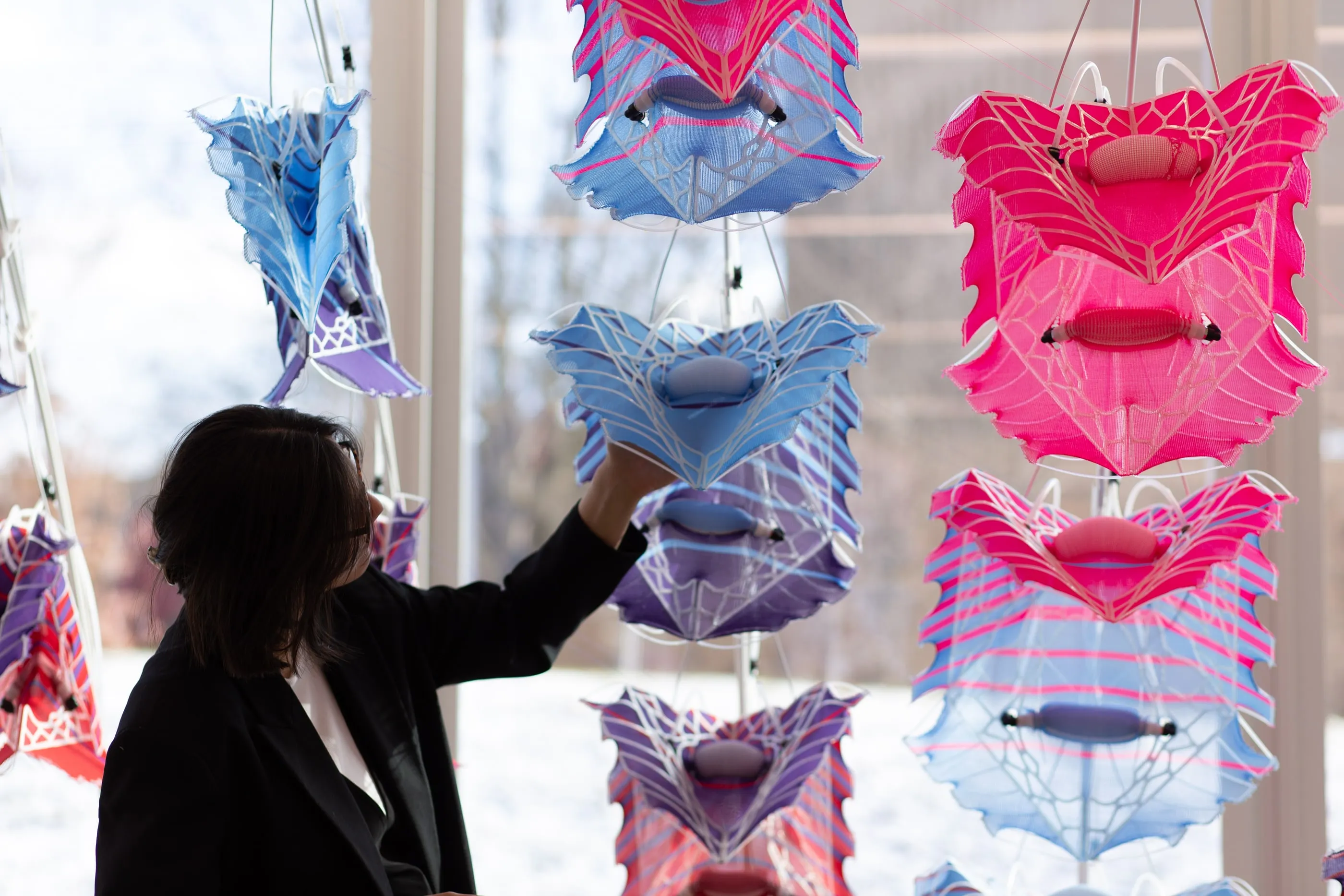
Knitted textiles, printed on by a robot while under tension, bloom when air fills their silicone bladders. Eight pneumatic zones and proximity sensors turn an installation into a surface that breathes and answers people.
- Context
- University of Michigan · Capstone
- Role
- Co-author · Robotic toolpath, fabrication, CNC knitting
- Team
- Jutang Gao, Daniel Merupu, Archit Goyal, Sean Ahlquist
- Location
- Ann Arbor, Michigan
- Year
- 2024–2025
- Tools
- Bladder pressure
- 15 psi
- Pneumatic zones
- 8
- Behaviour modes
- 4
The question
Can a room breathe? Textiles are soft, colourful and programmable, but they sit still. We wanted surfaces that move the way plants do, slowly and in response to their surroundings, driven by air instead of motors.
The material
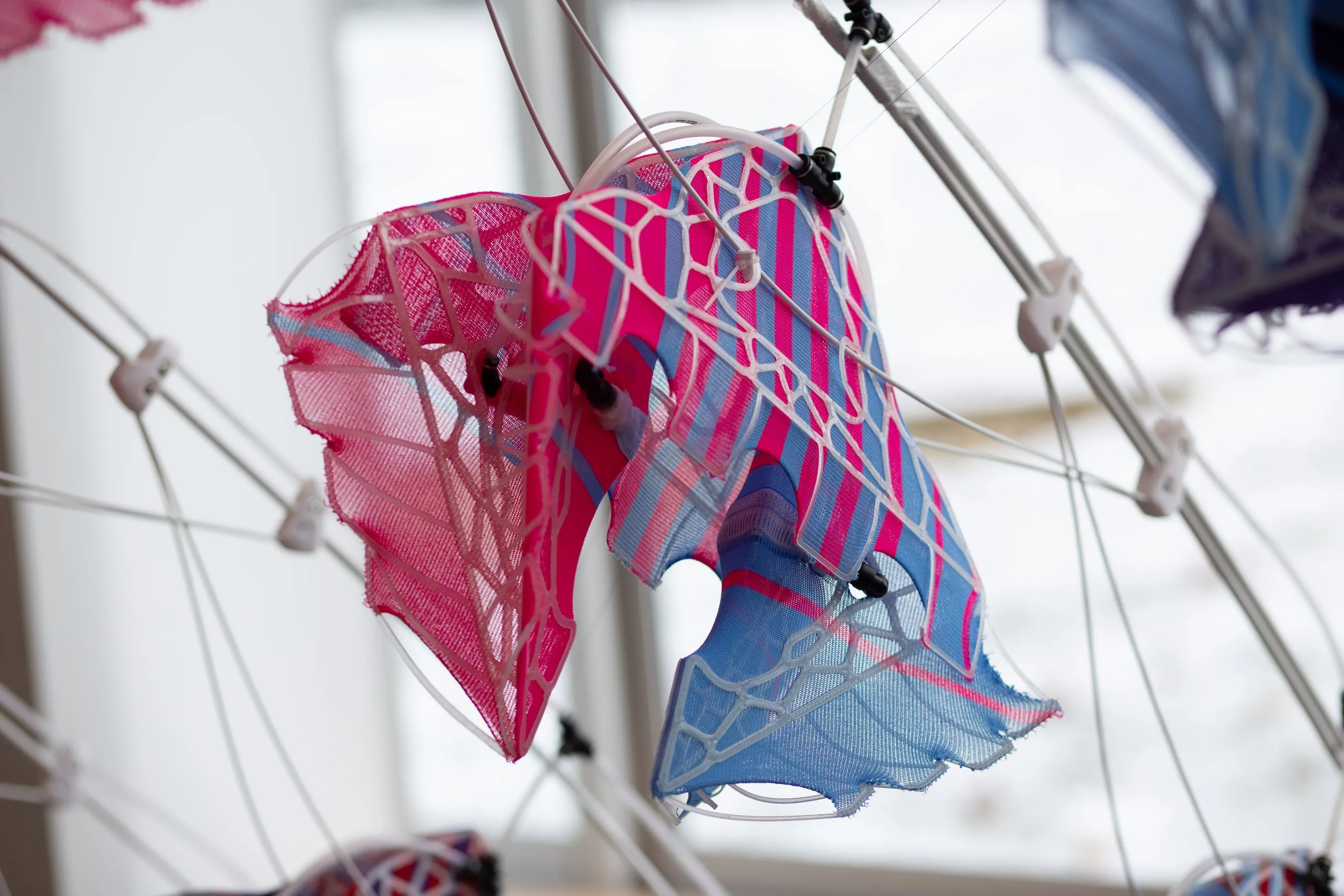
A CNC-knitted textile is stretched on a biaxial frame. A KUKA robot prints thermoplastic onto both faces, sandwiching the fabric. Cut free, the stored tension releases and each flat module folds itself into a 3D form.
Knit → print → bond → release → actuate
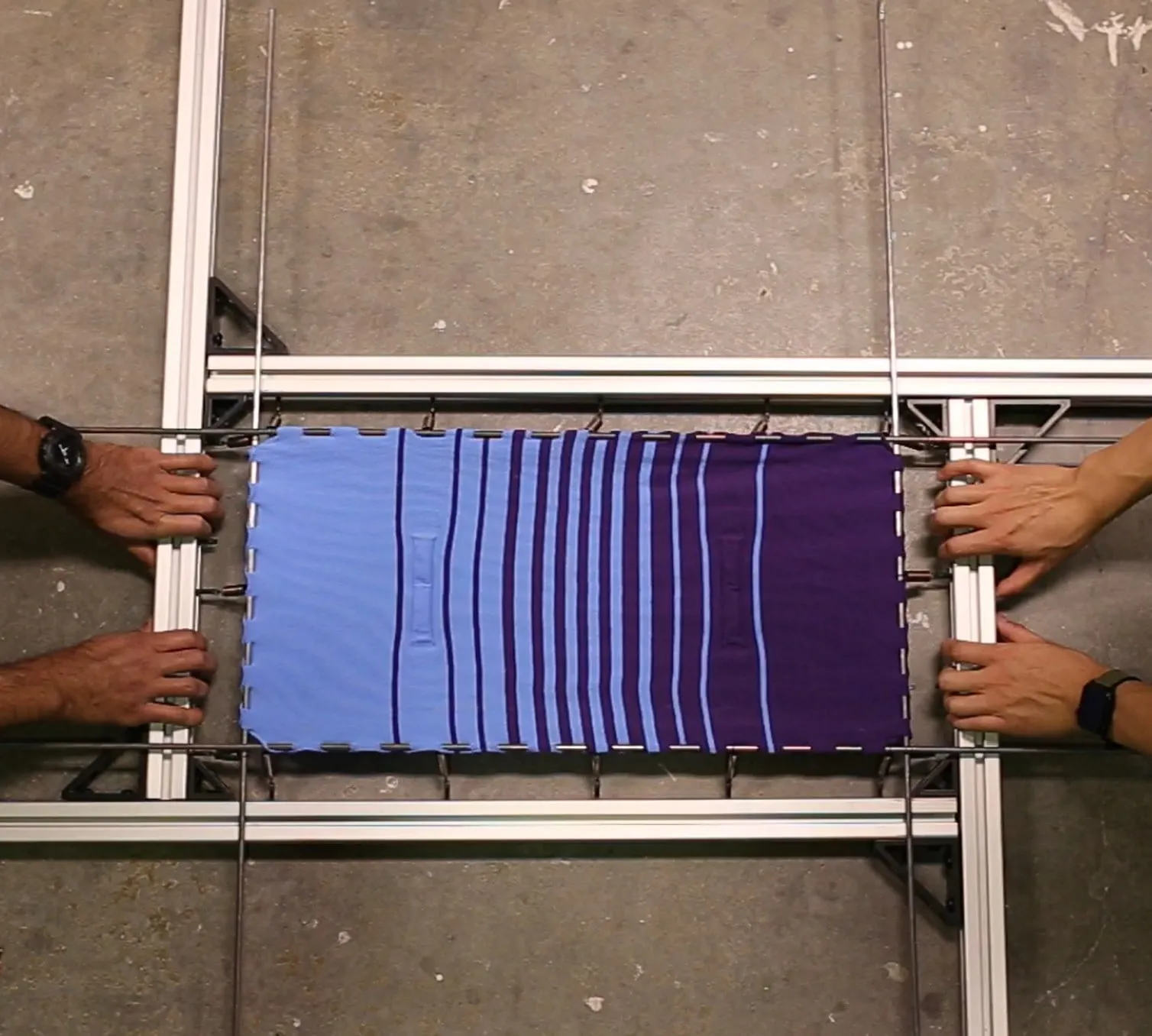
01Knit + tension
Knitted textile, pre-tensioned on a biaxial frame.
02Print
Robot prints the bottom layers, then the top.
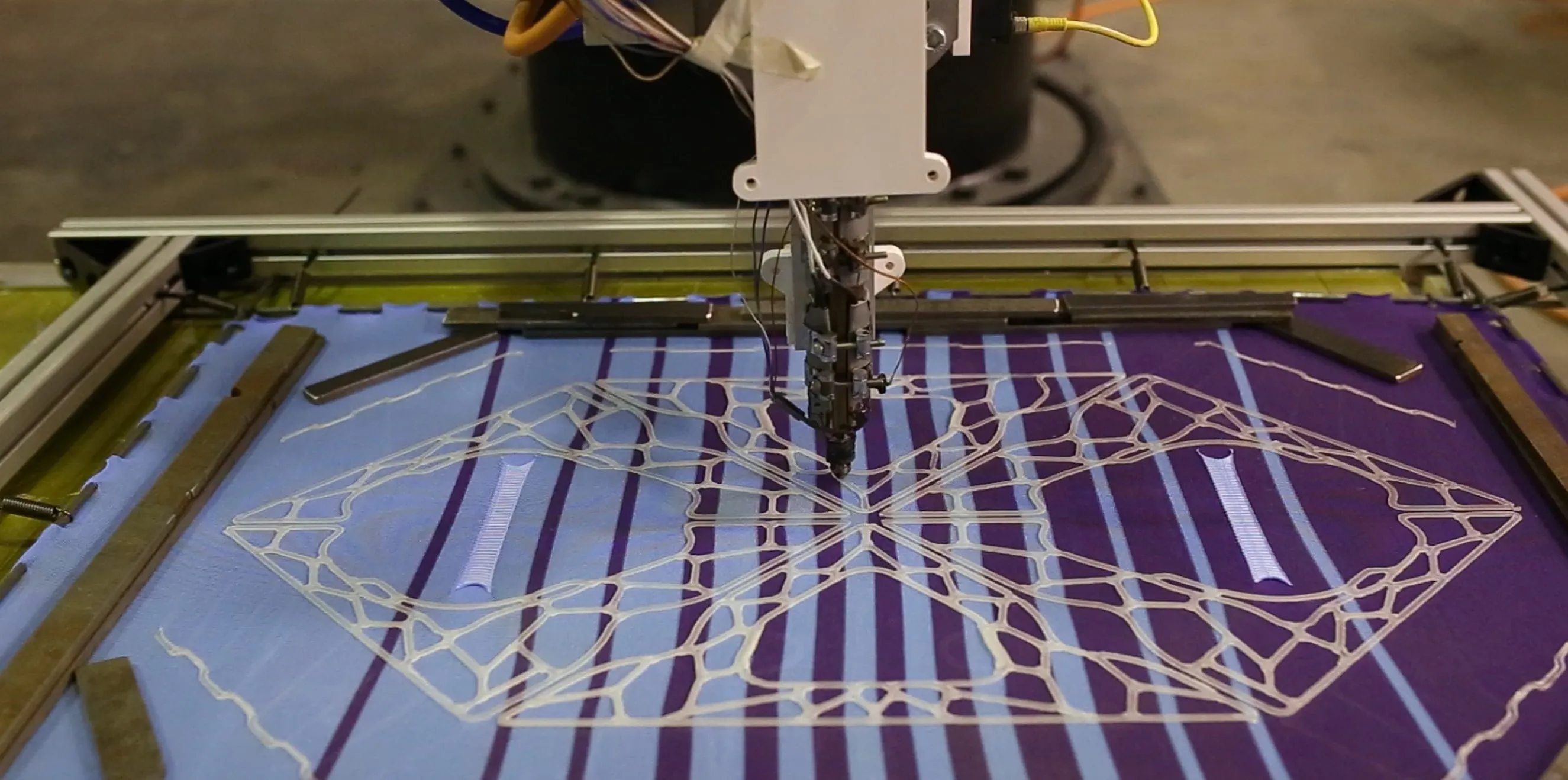
03Bond
Sandwich bonding locks the fabric in place.
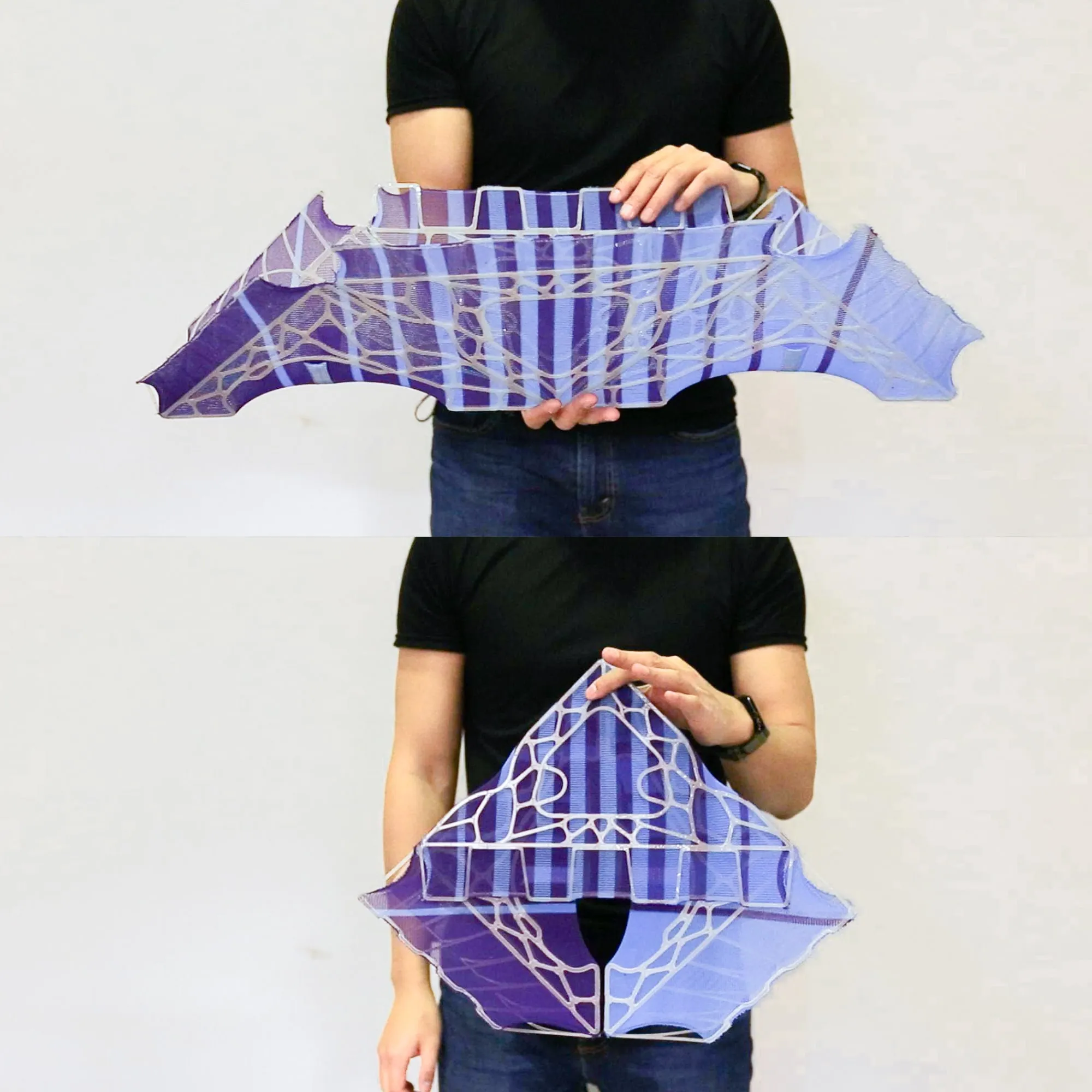
04Release
Cut free, the module folds into shape.
05Actuate
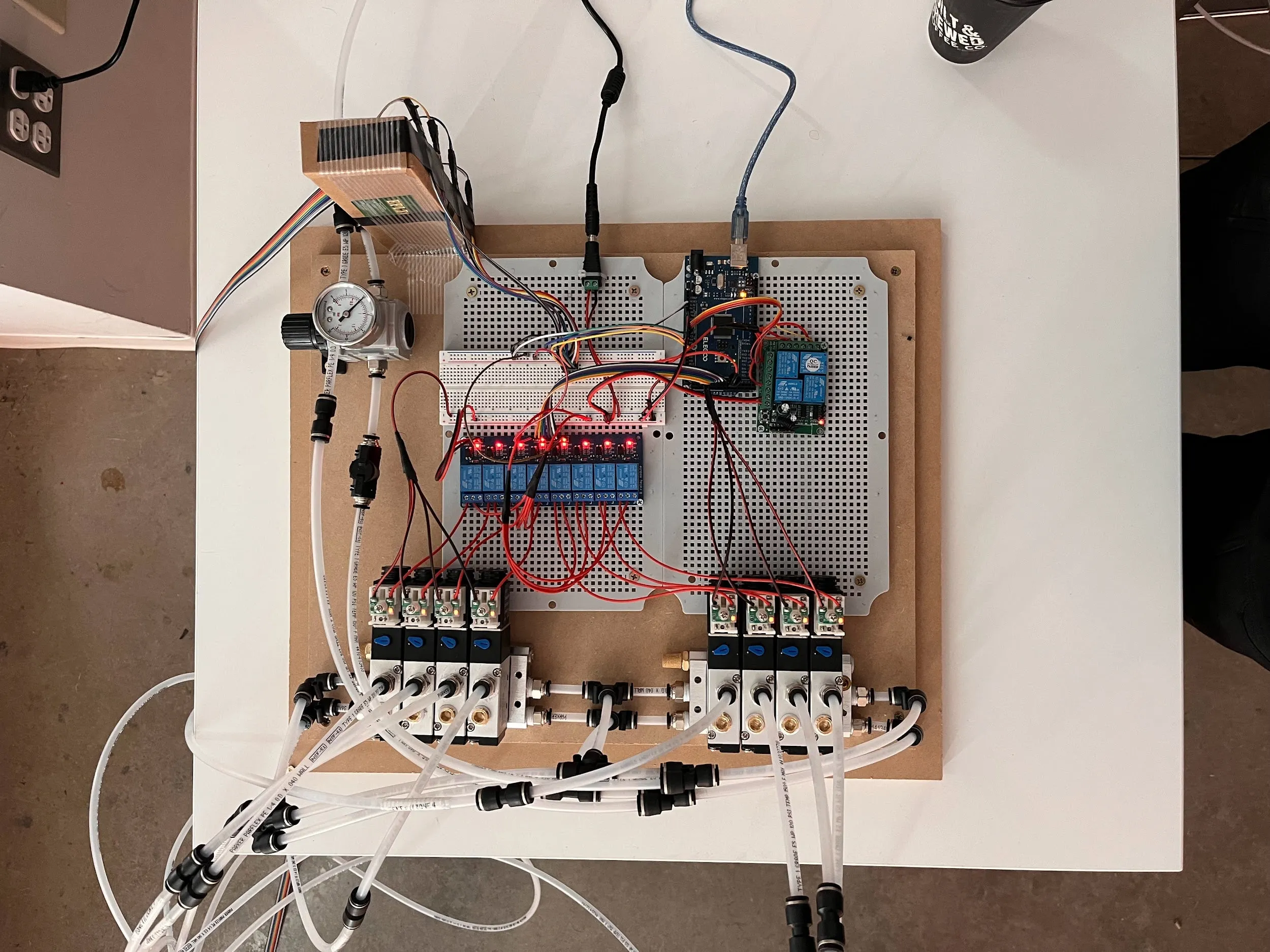
Eight solenoid zones, run by an Arduino.

The behaviour
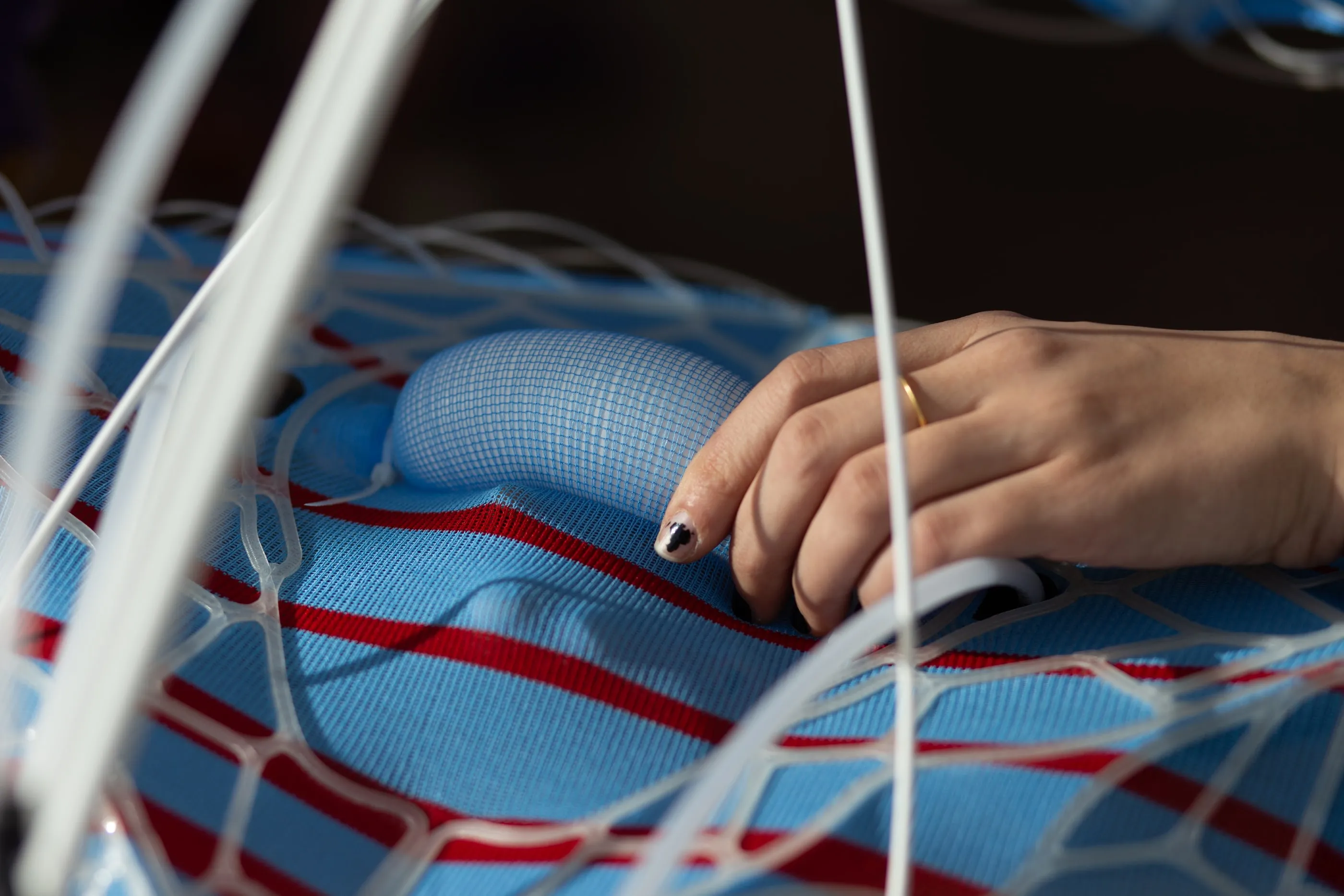
Silicone bladders in knitted sleeves inflate to 15 psi. An Arduino drives eight solenoid zones while infrared sensors watch for people. Four modes: off, a steady breathing rhythm, a random flutter, and an interactive blink that answers movement.
- Off
- Mode A
- Breathe
- Mode B · sequential rhythm
- Flutter
- Mode C · random timing
- Blink
- Mode D · reacts to people
Gallery
Flat on the frame, then folded by its own pre-stress.
Arduino, relays and eight solenoid valves.
Credits
- Authors: Jutang Gao*, Daniel Merupu*, Archit Goyal, Sean Ahlquist (*equal contribution)
- Taubman College of Architecture and Urban Planning, University of Michigan
- Published in ACADIA 2025