Digital Fabrication · 2024
Vertical Wetland
Robotic Additive Manufacturing of Urban Vertical Green Systems for Biodiversity
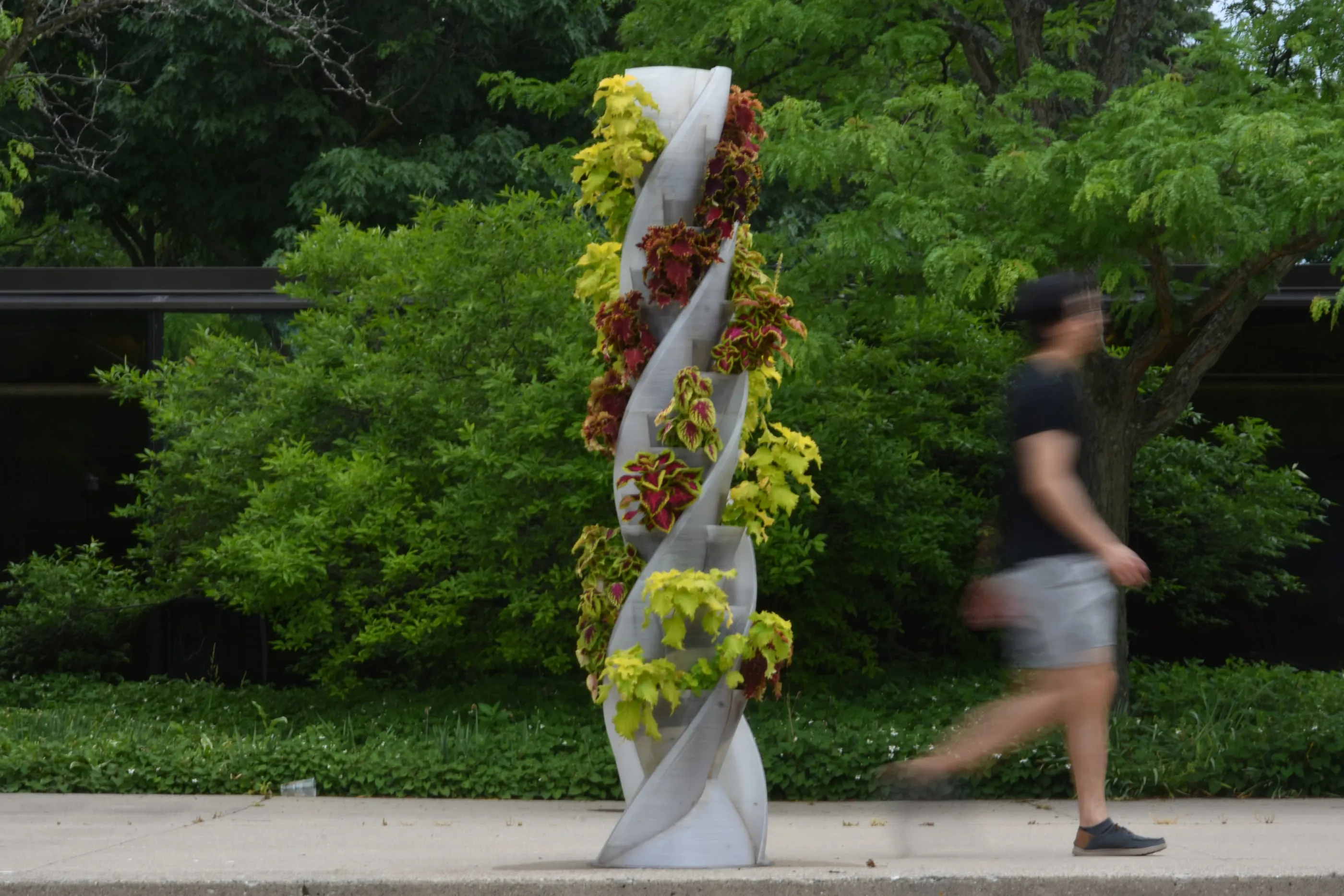
A 2.43 m tower printed by a robot as one continuous path. Three helical water channels feed 24 plant pods, turning a single PETG print into a small vertical wetland for urban biodiversity.
- Context
- University of Michigan · DART Lab
- Role
- Co-author · design computation and robotic fabrication
- Team
- Jutang Gao, Archit Goyal, Yichuan Li, Biyang Yan, Mania Aghaei Meibodi
- Location
- Ann Arbor, Michigan
- Year
- 2024
- Tools
- Continuous robotic print
- 59 h
- Layers at 0.8 mm
- 3,038
- Tall, one printed piece
- 2.43 m
The problem
Cities are sealed in glass, concrete and asphalt. They trap heat, shed rainwater and push species out. Green walls help, but they are expensive to build, hard to maintain and usually support one kind of plant.
The system
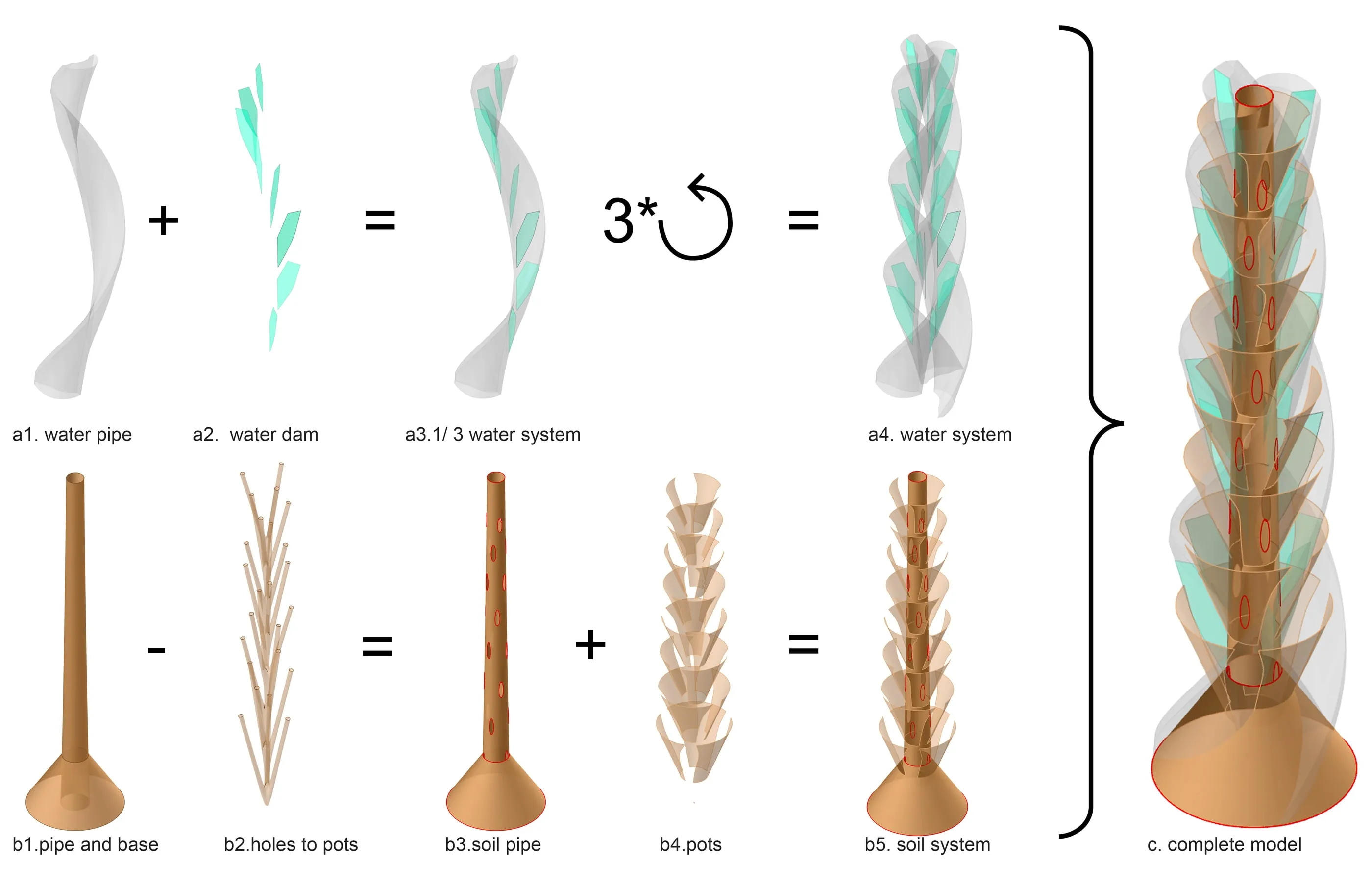
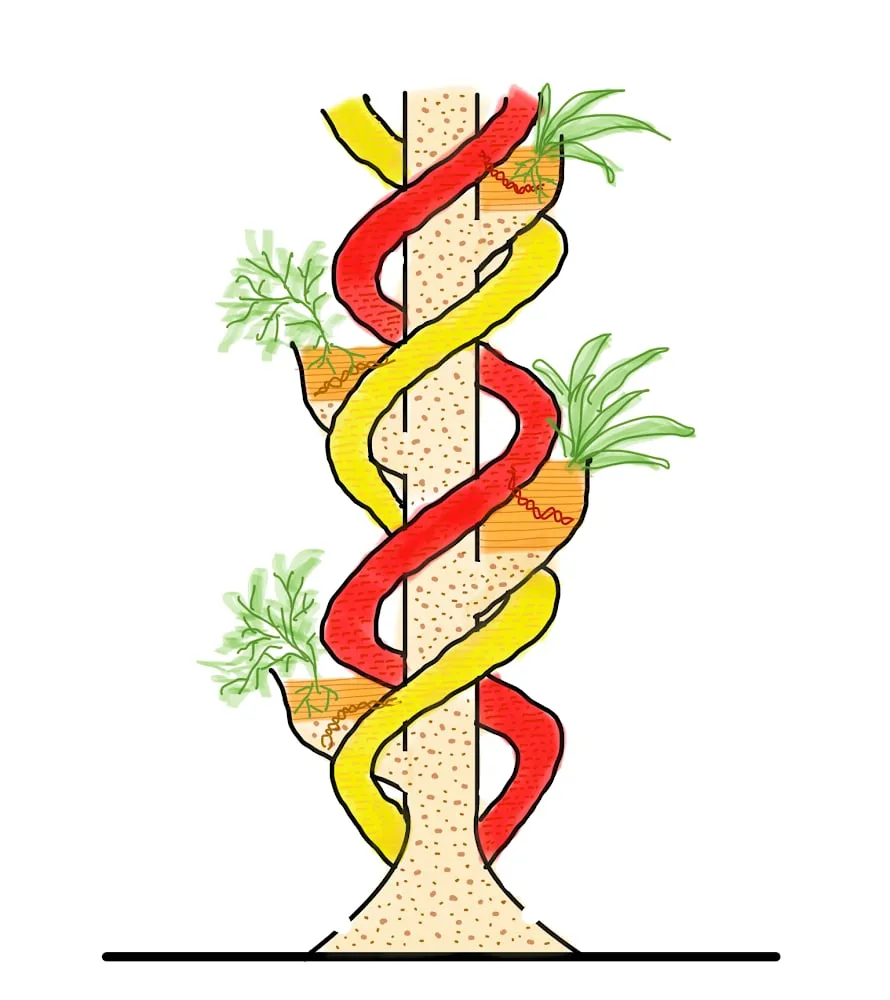
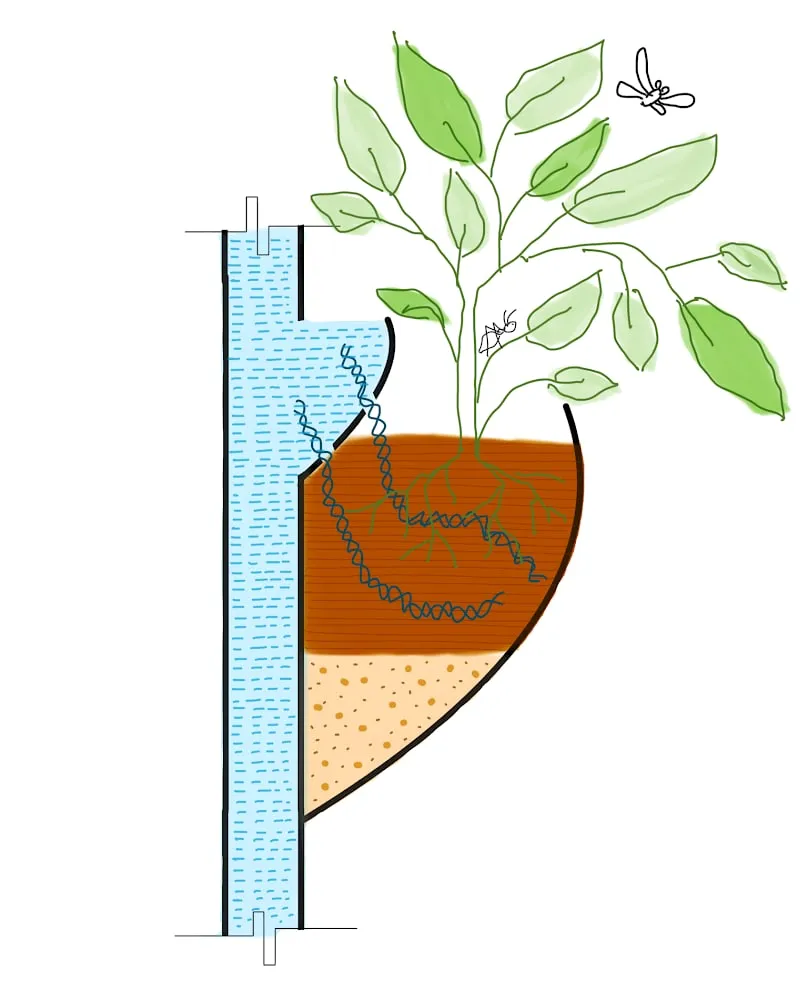
One printed object does the plumbing. Three helical channels carry water down the tower, dams split it into 24 reservoirs, and wicks feed each pod. A perlite shaft drains the excess. The soil-to-water ratio shifts from bottom to top, so different species share one column.
The print
A graph-based algorithm turned the whole tower into one continuous toolpath with no doubled walls. A KUKA KR-120 extruded PETG pellets in five sections, with no nozzle lifts inside a section. Dropping the layer height from 1 mm to 0.8 mm closed the leaks.
Design → toolpath → robot → installed
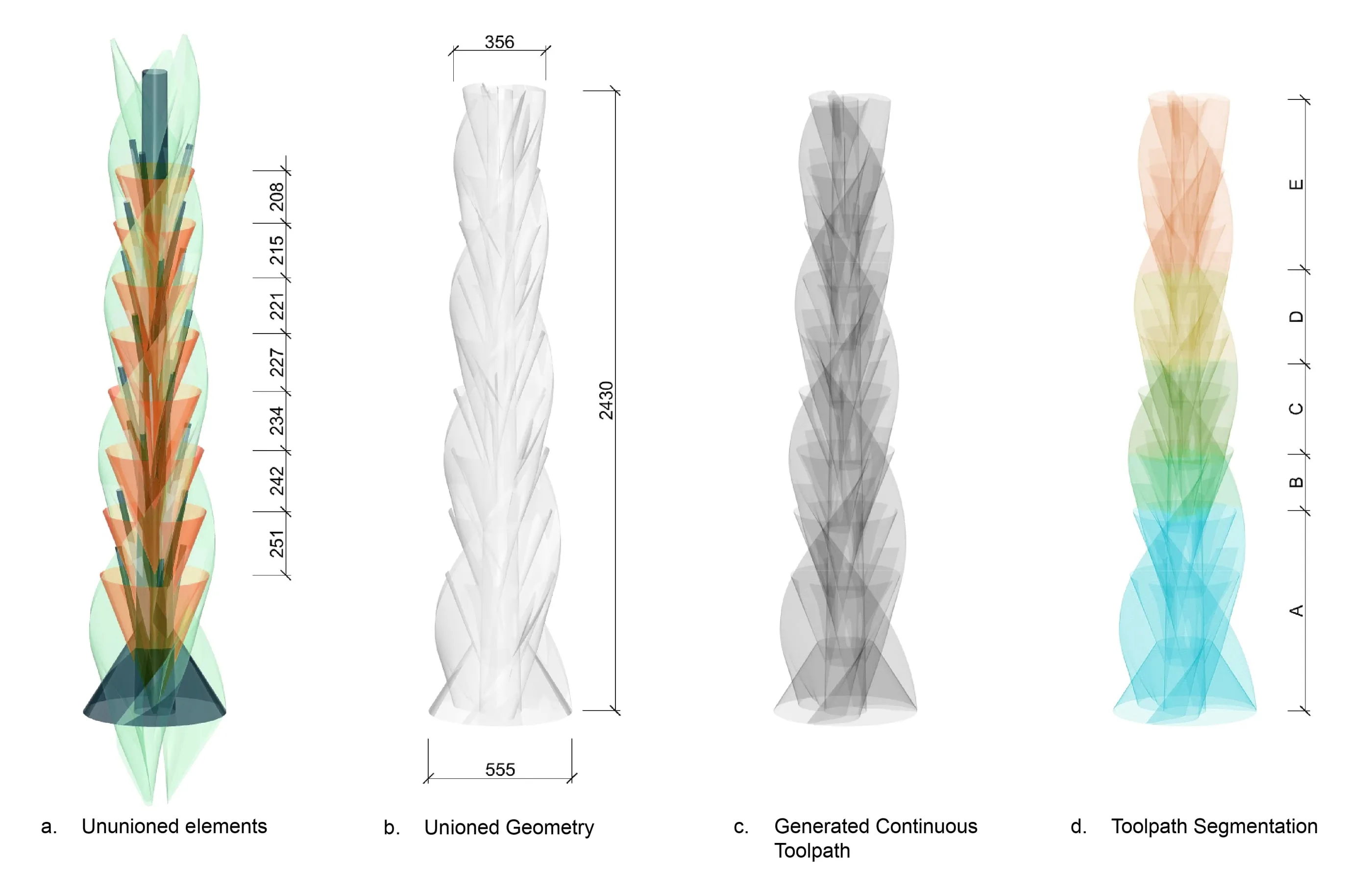
01Toolpath
Unioned geometry, one continuous path, five segments.
02Simulation
The path growing layer by layer.
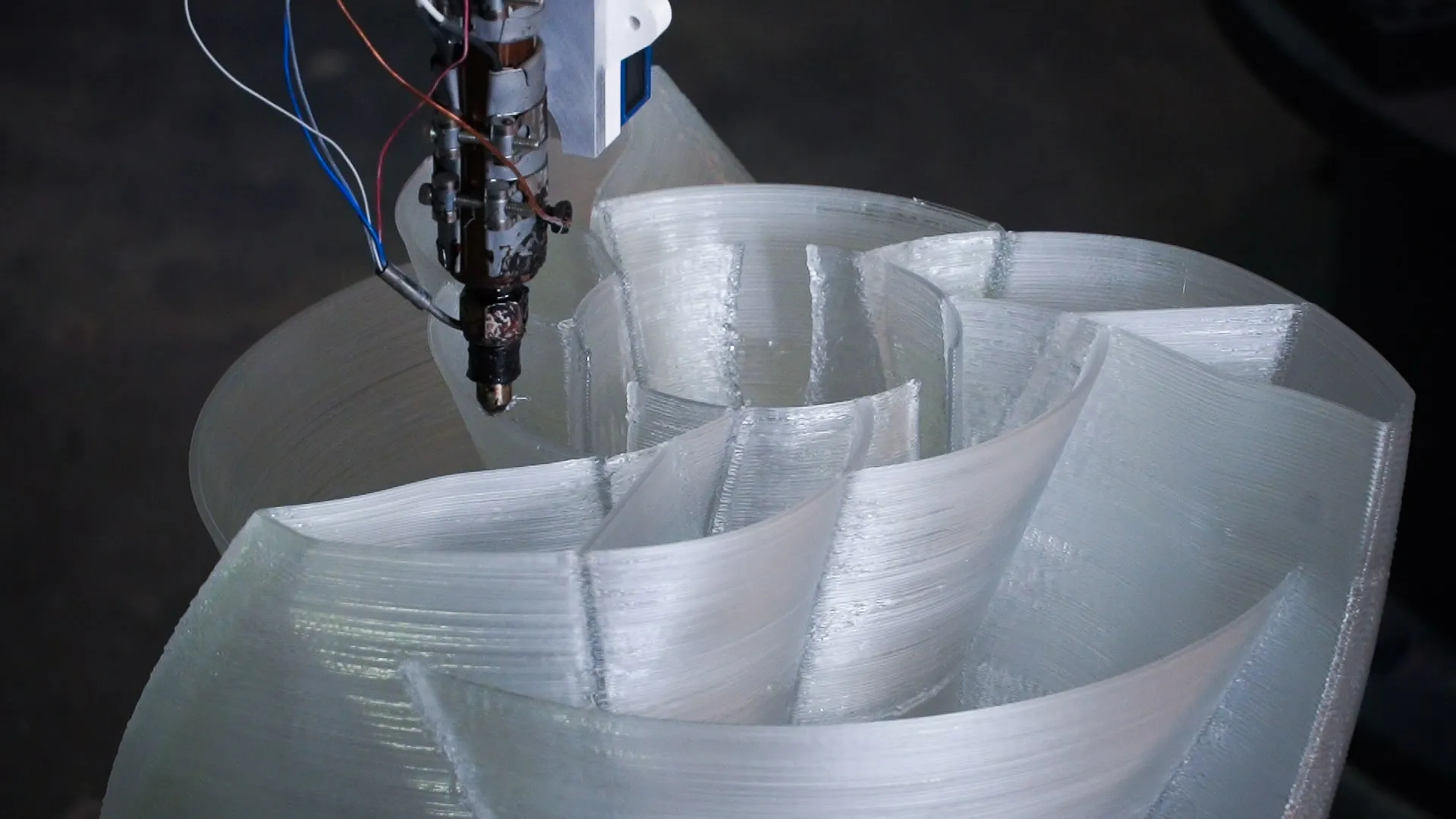
03Robot
Pellet extrusion on a KUKA KR-120.
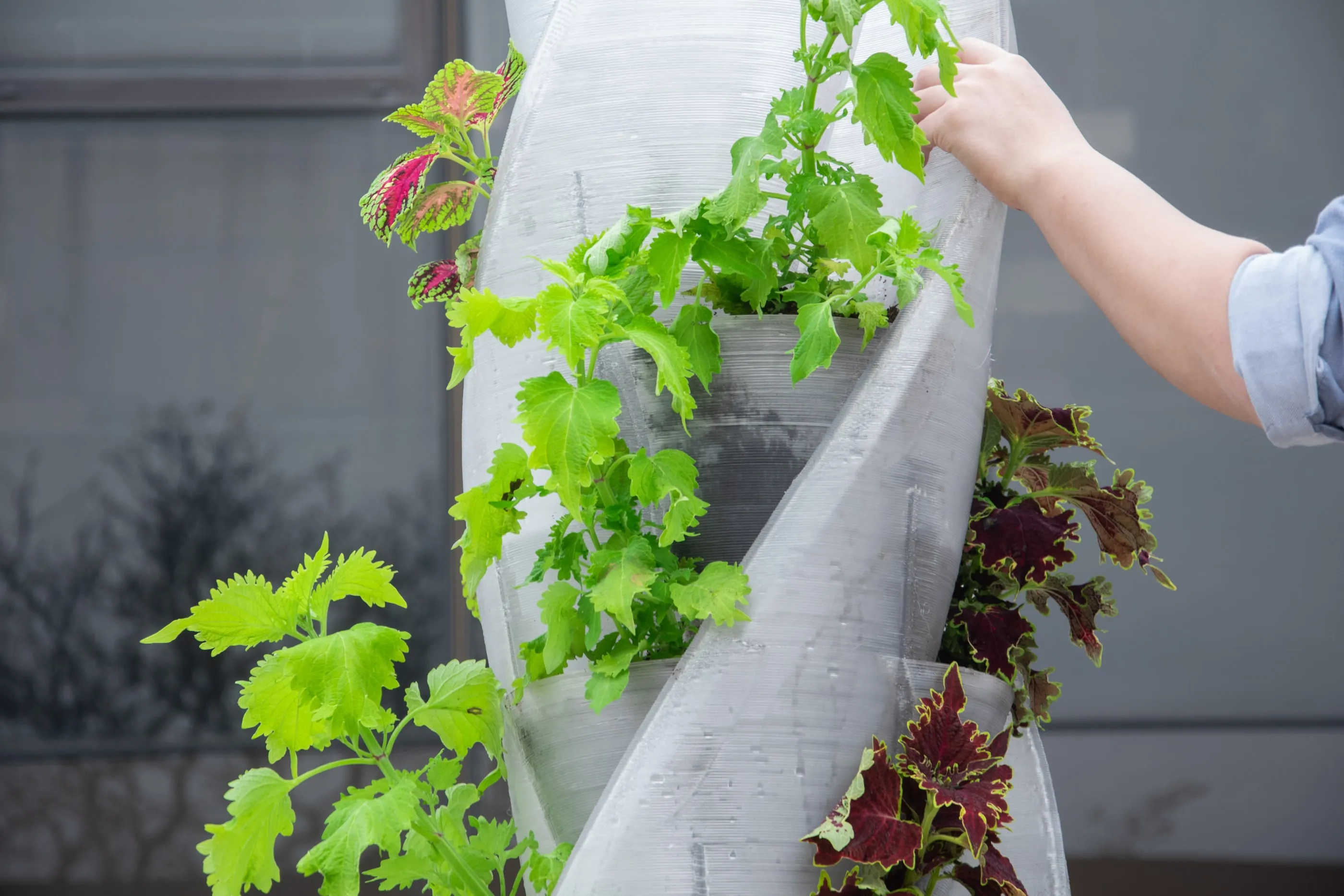
04Planted
Perlite, soil, wicks and plants.
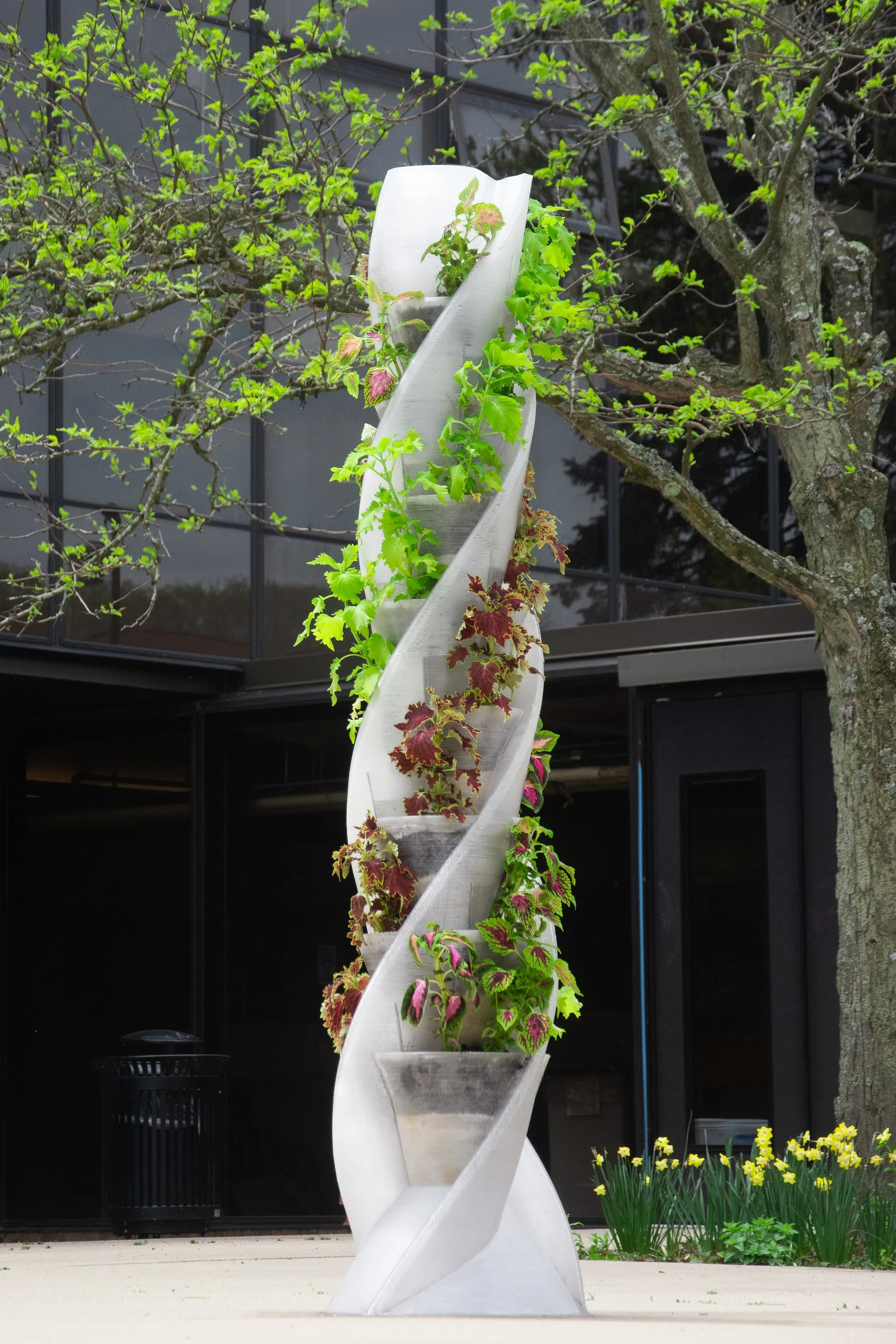
05Installed
Outdoors, April to August.
- 28.1 kg
- Printed weight
- 24 + 24
- Plant pods + reservoirs
- 5
- Continuous sections
- Apr–Aug
- Outdoors, no deformation
The result
The tower stood outdoors in Michigan from April to August, through 26 to 93 °F, with no visible deformation or discolouration. The wicks stored water and released it slowly to the soil, keeping the plants alive outdoors.
Gallery
KUKA KR-120 with pellet extruder, mid-print.
One continuous path, 0.8 mm layers.
Urban vertical green typologies the system draws from.
Credits
- Authors: Jutang Gao, Archit Goyal, Yichuan Li, Biyang Yan, Mania Aghaei Meibodi
- DART Laboratory, Taubman College, University of Michigan
- Published in ACADIA 2024: Designing Change